Daily History
War & conflict

Atomic Bomb Destroys Hiroshima

Hiroshima, Japan
Atomic Bomb Destroys Hiroshima — Hiroshima, Japan
Image: George R. Caron / Charles Levy · Public domain

A physicist named Paul Tibbets had no idea what he was carrying when he climbed into the cockpit of the Enola Gay on the morning of August 6, 1945. He knew it was heavy—so heavy that the B-29 bomber had to shed fuel just to get airborne. He knew it was secret. He knew his orders came from the highest levels of the War Department. What he almost certainly didn't know was that the device in his cargo hold worked on a principle that wouldn't be fully understood by the scientific community for another decade.

The atomic bomb was, in a strange sense, a weapon built on a guess.

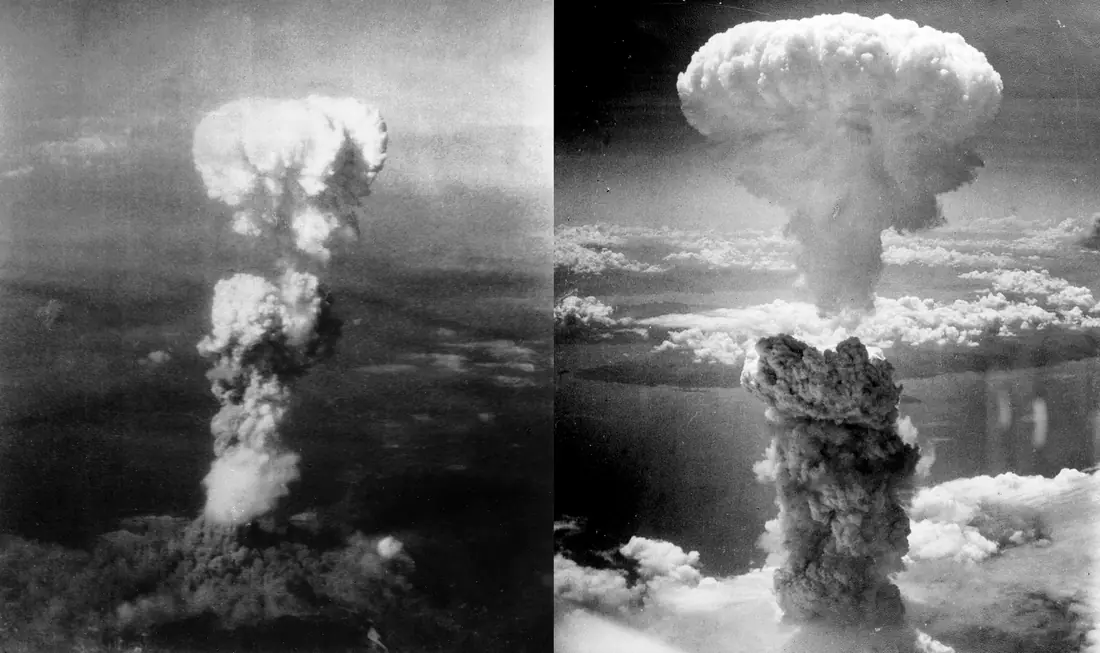
When Tibbets dropped "Little Boy" over Hiroshima at 8:15 a.m., the blast wave flattened everything within a mile—approximately 70,000 people, vaporized or crushed or burned so completely that their shadows were the only thing left behind, seared into stone. By year's end, the death toll reached 140,000. But here's what makes this particular Tuesday morning so architecturally strange in the history of warfare: the American military command didn't fully know whether the bomb would work at all.

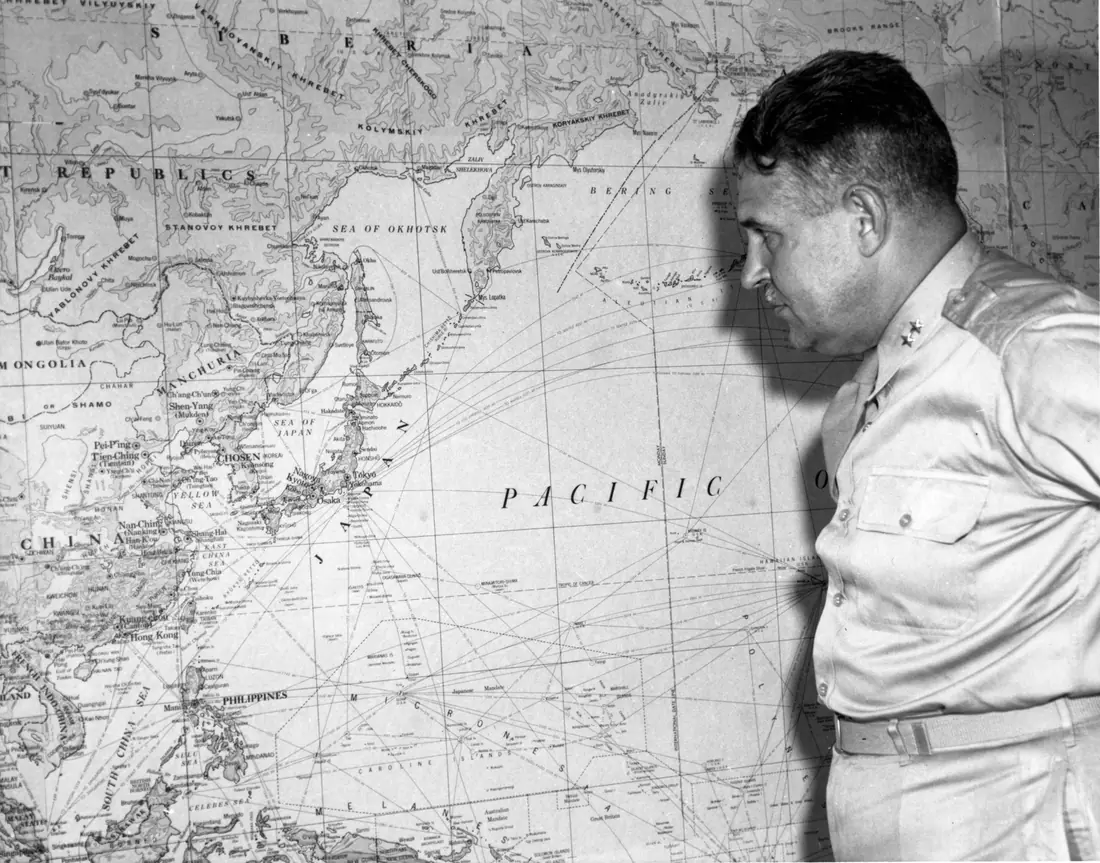
The Manhattan Project had built the device. Scientists had tested it once, in the New Mexico desert, less than a month earlier. That test worked. But dropping one from 31,000 feet over a city? That was untested. There was a real possibility—acknowledged by some of the physicists involved—that the bomb would be a dud. Tibbets and his crew could have flown 1,500 miles and released nothing but an expensive, radioactive failure.
Atomic Bomb Destroys Hiroshima — Hiroshima, Japan
Image: ENERGY.GOV · Public domain

The physics underneath was equally strange. The bomb worked by slamming two pieces of uranium-235 together so fast that they achieved "critical mass"—a density at which the uranium atoms spontaneously split, releasing energy so violent it could level a city. The engineering was elegant: a conventional explosive charge propelled one piece toward another at nearly the speed of sound. That's it. That's the trick. You take two hunks of metal, point them at each other, and detonate explosives behind one of them. The resulting chain reaction releases energy equivalent to 15,000 tons of TNT.

What's darkly absurd is that the Hiroshima bomb, for all its apocalyptic power, was crude. The scientists knew this. They estimated it would work with maybe a 50 percent success rate. When it detonated at 600 meters above the city, it released only about 15 percent of its potential energy. The remaining uranium didn't even split. The bomb was, technically, a failure—it simply failed upward, catastrophically.

Tibbets never saw the city. He was already banking away, climbing to altitude, when the flash came. His instruments registered the shock wave. His crew felt the heat. No one said anything for a long time.
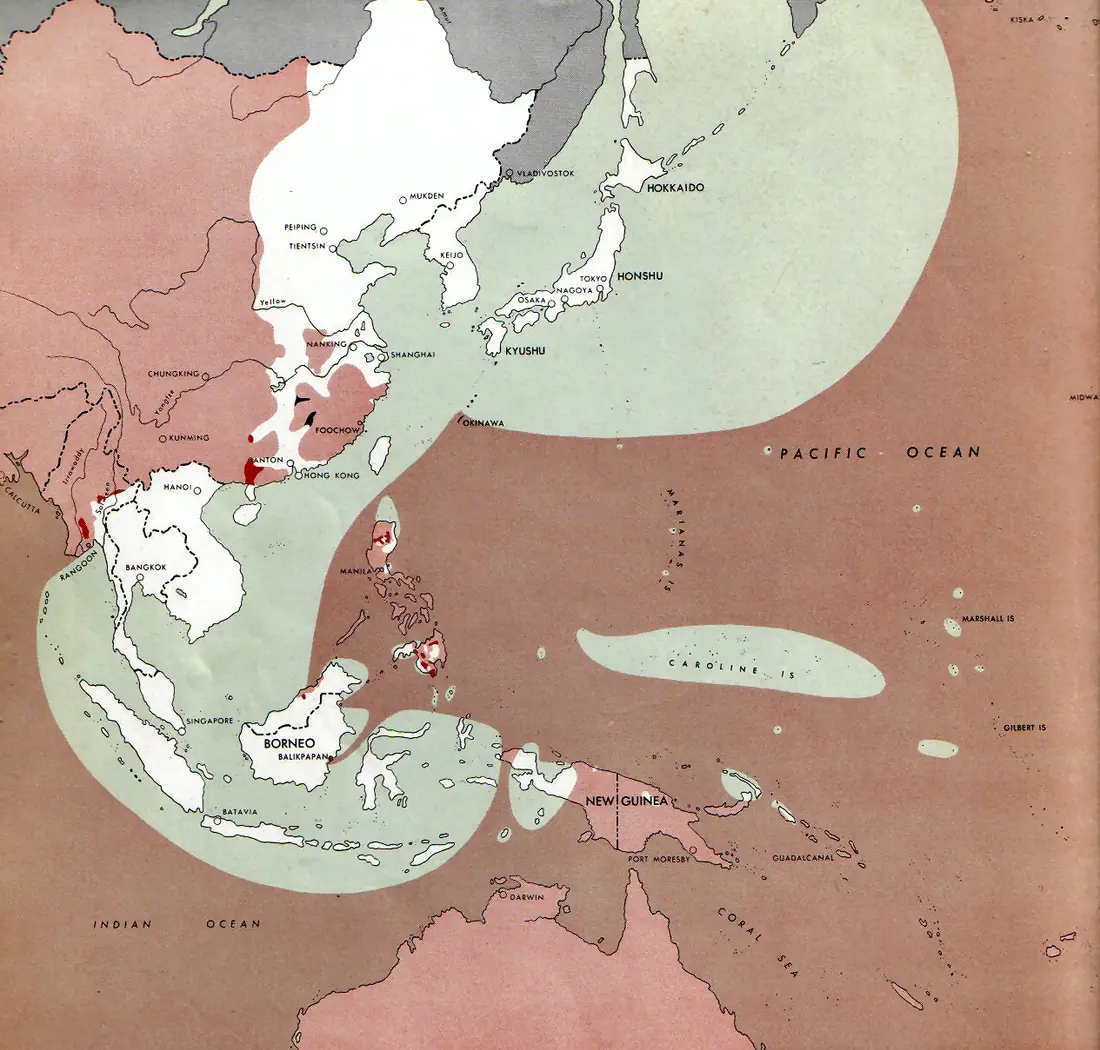
Atomic Bomb Destroys Hiroshima — Hiroshima, Japan
Image: Army Map Service · Public domain

What nobody anticipated—not the generals, not the scientists, not Tibbets—was that this single untested device would do something far more radical than destroy a city. It would introduce humanity to a new category of power: the power to unmake civilization itself. The bomb worked so thoroughly that its very success became its own argument. Within four days, Japan surrendered. Within months, the Soviet Union had built its own. Within years, enough fissile material existed on the planet to destroy every city in the world many times over.

All from a guess that happened to work.

Source: en.wikipedia.org/wiki/Atomic bombings of Hiroshima and Nagasaki
Exploration

Curiosity Rover Lands on Mars

Gale Crater, Mars

Curiosity Rover Lands on Mars — Gale Crater, Mars
Image: NASA · Public domain

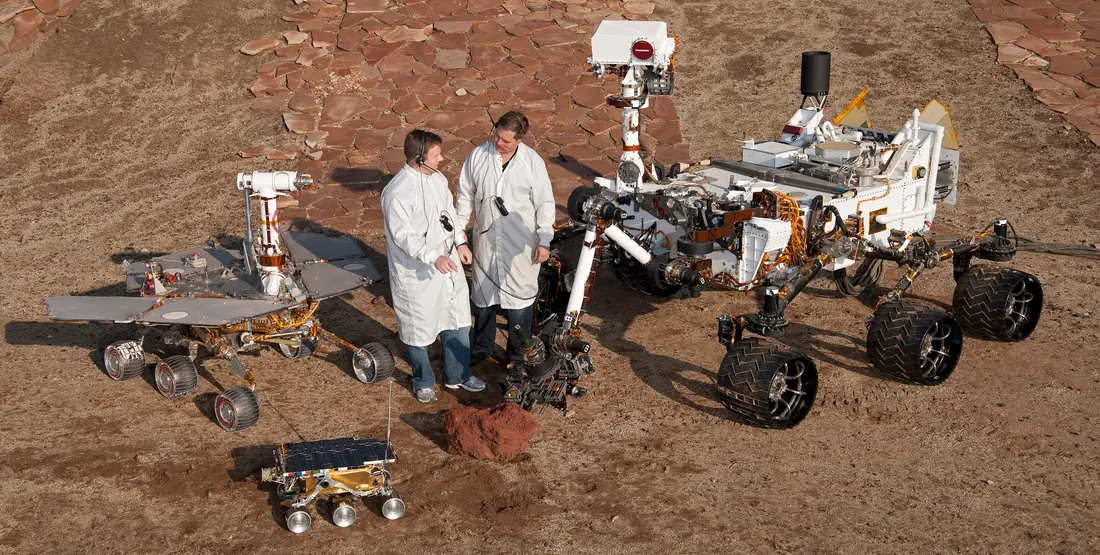
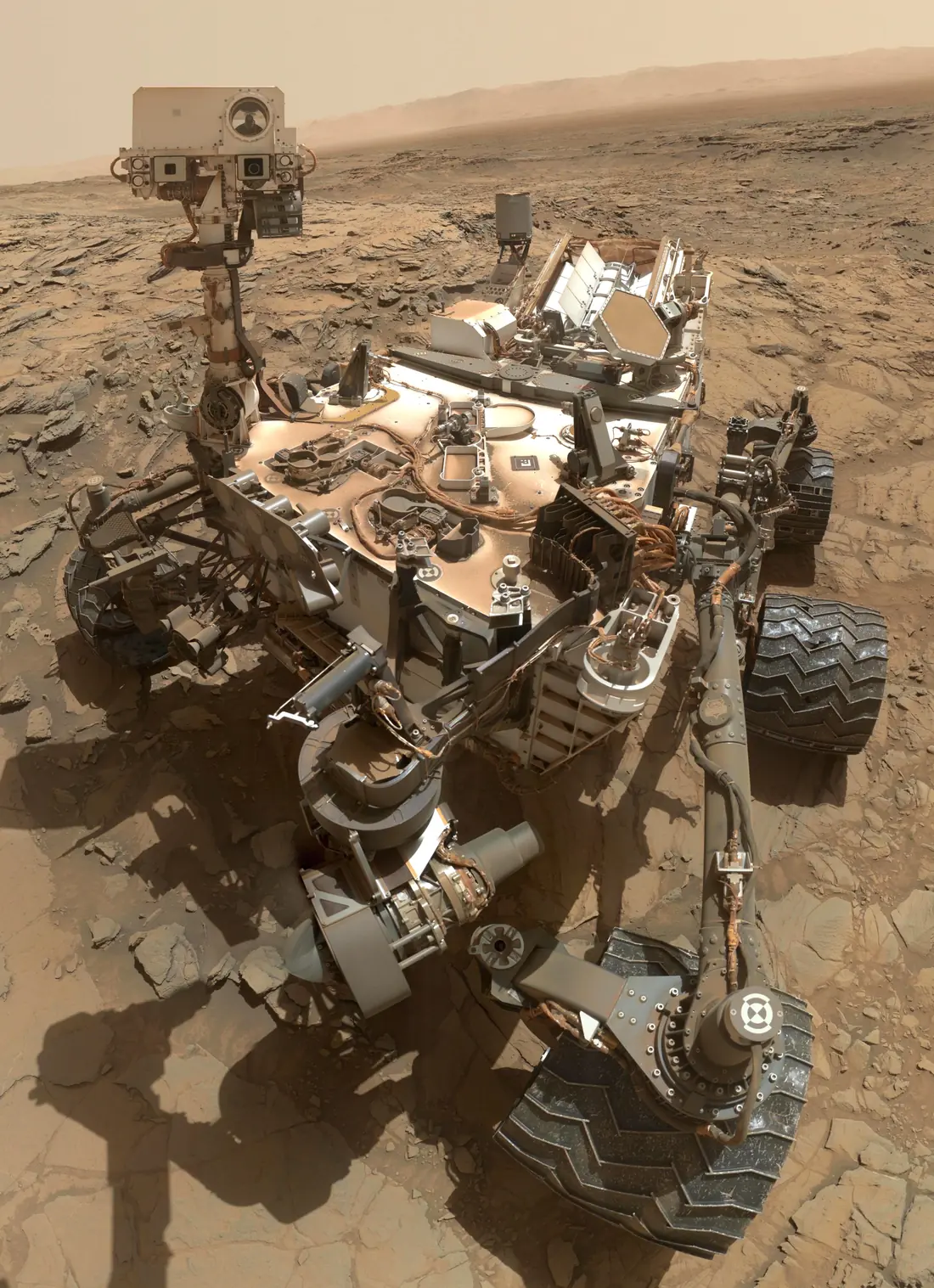
A car-sized robot with a laser for a hand descended through the Martian atmosphere at 13,000 miles per hour, suspended by cables from a hovering platform—a delivery method so audacious that NASA engineers had actually argued about whether it would work right up until the moment it needed to.

On August 6, 2012, Curiosity landed in Gale Crater, and the world barely noticed. It was a Monday. The Olympics were happening in London. A video of a screaming baby had recently gone viral. Mars, as always, could wait.

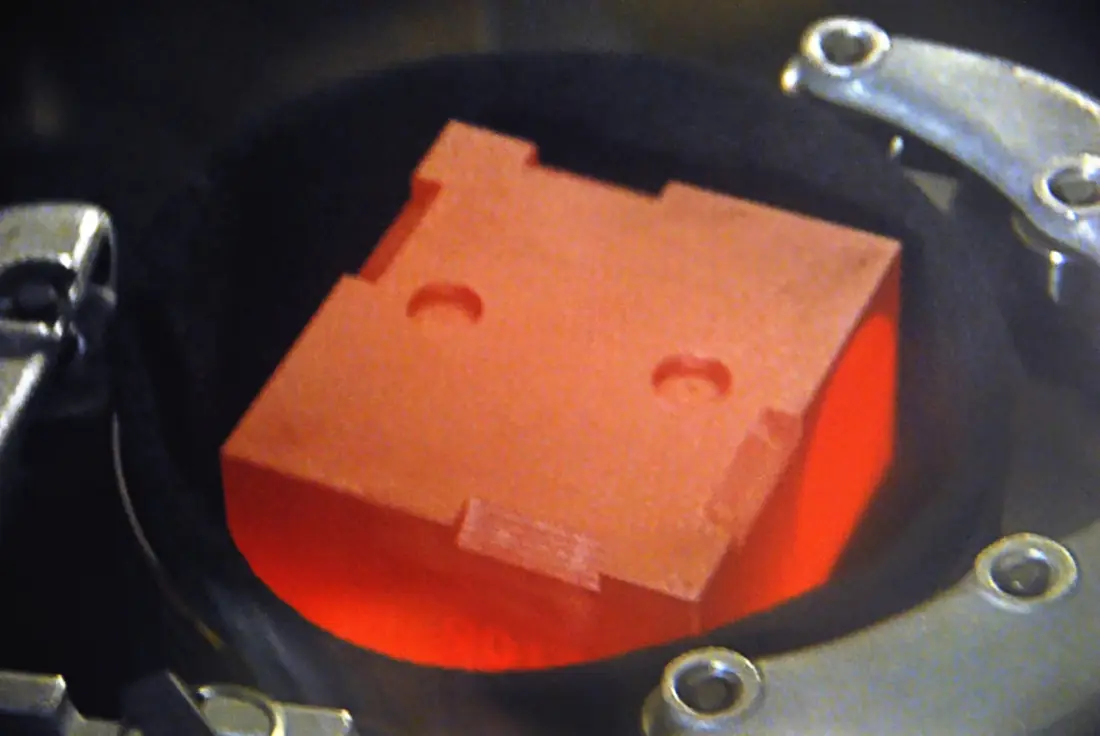
But here is what changed that day, even if nobody quite realized it yet: humanity had just placed a working laboratory on another planet. Not a probe. Not a remote sensor. A full-sized rover carrying ten scientific instruments, including a radiation detector, a spectrometer, and yes, an actual laser—officially called the ChemCam, which could vaporize rock from thirty feet away to analyze what it was made of. The rover weighed 900 kilograms and was powered by a plutonium-238 battery that would keep it running for years. It was, in every practical sense, a car that could think for itself.

Curiosity Rover Lands on Mars — Gale Crater, Mars
Image: NASA · Public domain

The real story, though, is what didn't happen. For decades, Mars had been where human ambitions went to fail. Of all the missions ever sent to Mars, fewer than half had worked. The Soviet Union tried. The United States tried. Japan tried. Most of them crashed, burned, or simply stopped transmitting data into the void. Mars had earned a reputation as a planet that actively rejected visitors—a place where the laws of physics seemed to have a personal vendetta against your hardware.

Curiosity was different because its landing was different. Traditional Mars rovers had used parachutes and retrorockets. They were delicate, fussy, and prone to disaster. NASA's engineers, led by Adam Steltzner, a former rock guitarist who had pivoted into rocket science, invented something called the sky crane: a hovering platform that would lower the rover on cables like a rappelling climber. It had never been done before. On Earth, they tested it once, in the New Mexico desert. Once. Then they sent it to Mars and hoped it worked.

Curiosity Rover Lands on Mars — Gale Crater, Mars
Image: Idaho National Laboratory · CC BY 2.0

It did work. The rover touched down at 10:32 p.m. Pacific Time. Within hours, it had sent back photographs. Within days, it had found evidence of ancient streambeds—proof that water had once flowed across the Martian surface. Within weeks, it had detected complex organic molecules in Martian rocks.

What nobody anticipated was how long Curiosity would last. It was supposed to operate for two years. It was still operating eleven years later, still sending data, still making discoveries that rewrote what we knew about Mars. By 2023, it had traveled nearly twenty miles across the crater floor, climbed 3,600 meters up Mount Sharp, and collected enough evidence that Mars had once been habitable—not just theoretically, but demonstrably. Liquid water. A neutral pH. Organic chemistry. Everything life needs.

So on August 6, 2012, while the world watched gymnasts and swimmers in London, a robot that would outlast most of the people who built it was teaching us that we were not alone in having once been alive. We just didn't know it yet. The rover knew. It had the laser.

Source: en.wikipedia.org/wiki/Curiosity (rover)

Use the arrow keys to move between days

Browse the full archive →