Soviet Union Declares War on Japan
Moscow, Soviet Union
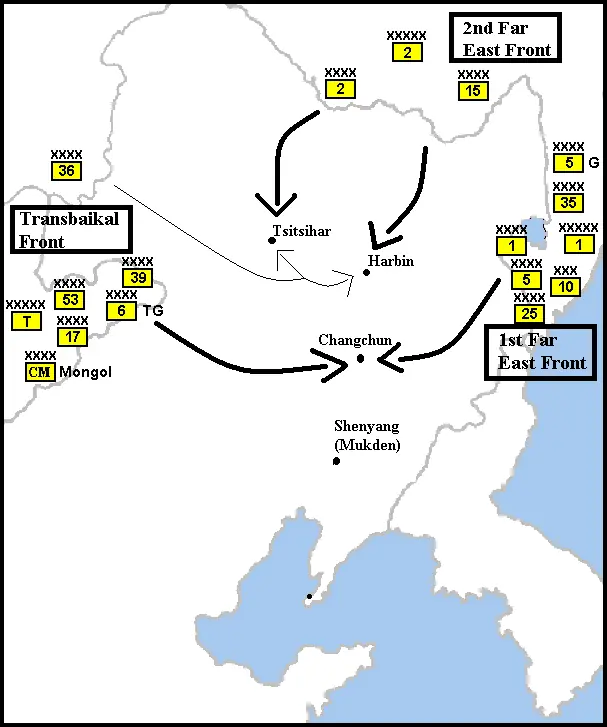
Stalin gave the order on August 8, 1945, at 5 p.m. Moscow time, and the Soviet Union had exactly 90 days to destroy Japan.
That was the deal. The Americans had asked for Soviet entry into the Pacific War, and Stalin had agreed at Yalta in February, but with a price: territorial concessions in the Far East and a narrow window of time. Three months from the moment the Germans surrendered in May, the Soviets would march into Manchuria. Hitler was dead. Now came the rush to grab land before the Japanese surrendered—because everyone in that room knew Japan would surrender soon, and whoever controlled the territory when it happened would own the postwar map.
The scale of what followed was almost incomprehensible. The Soviets assembled 1.5 million troops along the Manchurian border. For comparison, the entire Japanese Kwantung Army defending the region numbered 713,000 men. The Soviets had three times the manpower, and they used it like a hammer. In 23 days—not the full 90—the war was over.
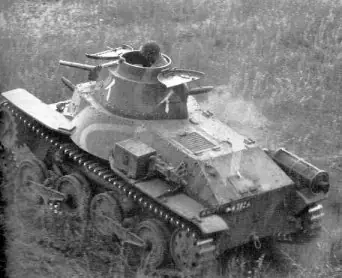
General Aleksandr Vasilevskiy commanded the invasion, and he moved with the precision of a man who had learned his trade grinding through Eastern Europe. The Soviets advanced 560 kilometers in two weeks across some of the harshest terrain on Earth. It was August, but the Gobi Desert still killed. Dust storms reduced visibility to 50 meters. Temperatures swung from 40 degrees Celsius in daylight to near freezing at night. The Japanese, fighting in summer uniforms designed for a different kind of war, began surrendering in groups of thousands.
The numbers tell the story better than any strategy could. Soviet casualties: 8,219 killed. Japanese casualties: 61,000 killed and 594,000 taken prisoner—nearly 84 percent of the Kwantung Army. The disparity was so grotesque that it barely qualifies as a war. It was an occupation that happened to involve fighting.
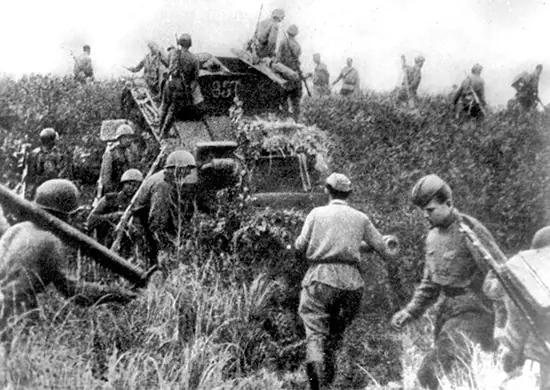
By August 15, Japan announced surrender. The Soviets, having lost fewer soldiers in three weeks than the Americans lost in a single day at Normandy, now controlled Manchuria, southern Sakhalin, and the Kuril Islands. They had entered the war on August 8 and claimed their prize before the ink dried on Japan's capitulation.
This is where the irony sits, heavy and permanent. The Americans had wanted Soviet help against Japan because they feared the cost of invasion—estimates ran to half a million American casualties, maybe more. The Soviets arrived, broke the Kwantung Army, and collected real estate worth decades of geopolitical leverage. Stalin got exactly what he wanted: territory, influence, and a foothold in the Far East that would shape the Cold War before it even had a name.
The war itself—the one between the Soviet Union and Japan—lasted 23 days. It was the shortest decisive military campaign of the entire Pacific War. And it was also the most consequential for the future, because it wasn't really about Japan at all. It was about what came after. The Soviets weren't fighting the Japanese in Manchuria; they were fighting for the right to sit at the table when the world got divided up. They won that fight in three weeks, and the rest of the 20th century paid for it.