Daily History
Exploration

Magellan's Fleet Departs for First Circumnavigation

Seville, Spain
Magellan's Fleet Departs for First Circumnavigation — Seville, Spain
Image: Unknown authorUnknown author · Public domain

The August sun beat down on Seville, a thick, insistent heat that clung to the cobblestones and ripened the air with the scent of salt, tar, and human ambition. For weeks, the city’s docks along the Guadalquivir had been a theater of organized chaos, a place where the ordinary business of commerce met the extraordinary preparations for what many whispered was a fool’s errand. This was not a moment that felt like the hinge of history; it felt like another Tuesday in a busy port, albeit one with an unusual number of dignitaries and a palpable, if unspoken, anxiety.

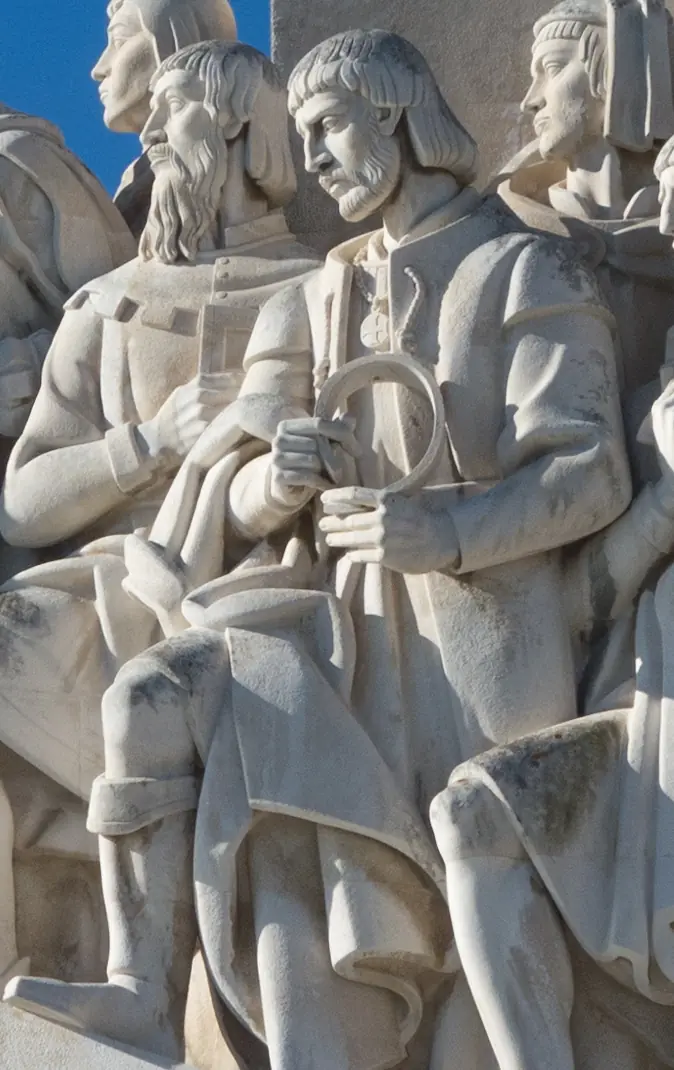
Five ships, relatively small caravels and carracks by later standards—the *Trinidad*, *San Antonio*, *Concepción*, *Victoria*, and *Santiago*—bobbed gently, their wooden hulls groaning under the weight of provisions. Flour, wine, salted meat, hardtack, and enough fresh water to last an optimistic few weeks. They also carried cannons, muskets, and trinkets for trade, alongside the navigational instruments that represented the cutting edge of 16th-century technology, which is to say, not nearly enough. These vessels, barely 80 feet long, were about to become very, very small in a very, very large world.

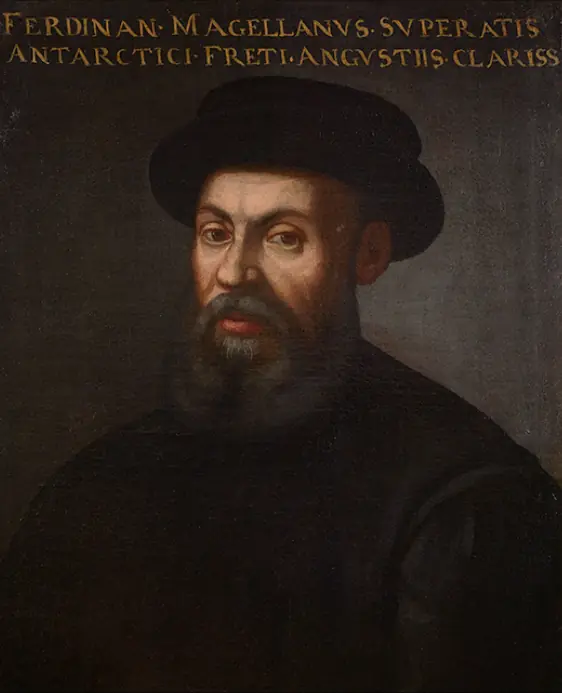
At the heart of this audacious enterprise was a Portuguese nobleman named Fernão de Magalhães, though the Spanish crown now knew him as Fernando de Magallanes—Magellan, to history. Having fallen out of favor with his own king, Manuel I, over a perceived slight and a denied request for a pay raise, Magellan had done what any truly stubborn and ambitious man might: he’d taken his grievances, and his revolutionary idea, to the competition. For two years, he had been badgering the young King Charles I of Spain (later Emperor Charles V) with a proposition that bordered on heresy: a westward route to the Spice Islands, bypassing the Portuguese-controlled eastern passages. The Treaty of Tordesillas had divided the known world between Spain and Portugal; Magellan argued the Moluccas, the fabled source of cloves and nutmeg, lay on Spain’s side of the line, if only one went west enough.
Magellan's Fleet Departs for First Circumnavigation — Seville, Spain
Image: Zeferros · CC BY-SA 4.0

The logistical nightmare of outfitting a fleet, securing funding, and recruiting a multinational crew of some 270 men—a volatile mix of Spanish, Portuguese, Italian, French, German, and even English sailors—had been a slow-burning fuse. Mutinies had been threatened before they’d even left sight of land, and Magellan himself faced constant suspicion from his Spanish captains. Yet, on August 10, 1519, the moment arrived. The ships, flags snapping, weighed anchor. The crowds on the shore waved, some cheering, some quietly making the sign of the cross. They were sailing into the unknown, chasing the scent of cloves and the promise of unimaginable wealth, blissfully unaware that they were about to redraw the map of the entire planet. One ship, the *Victoria*, would return three years later, a ghost of its former self, carrying a mere 18 survivors. Its hold was stuffed with 27 tons of spices, enough to pay for the entire expedition, with a handsome profit left over for the crown. The captain who completed the voyage, Juan Sebastián Elcano, was not Magellan. Magellan himself had met his end in a skirmish in the Philippines, a man who found the world, but not his way back home.
Magellan's Fleet Departs for First Circumnavigation — Seville, Spain
Image: christopher_brown · CC BY 2.0

Source: en.wikipedia.org/wiki/Ferdinand Magellan

War & conflict

Otto the Great Halts Magyar Invasions at Lechfeld

Lechfeld, Germany

Otto the Great Halts Magyar Invasions at Lechfeld — Lechfeld, Germany
Image: Hektor Mülich[1] (d. 1490) · Public domain

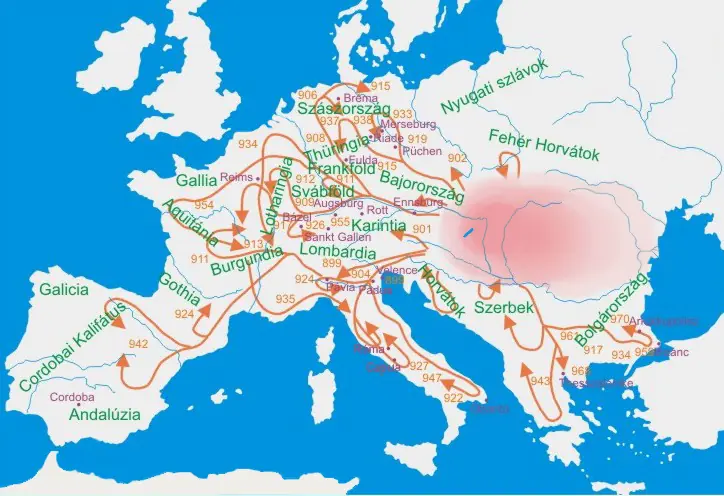
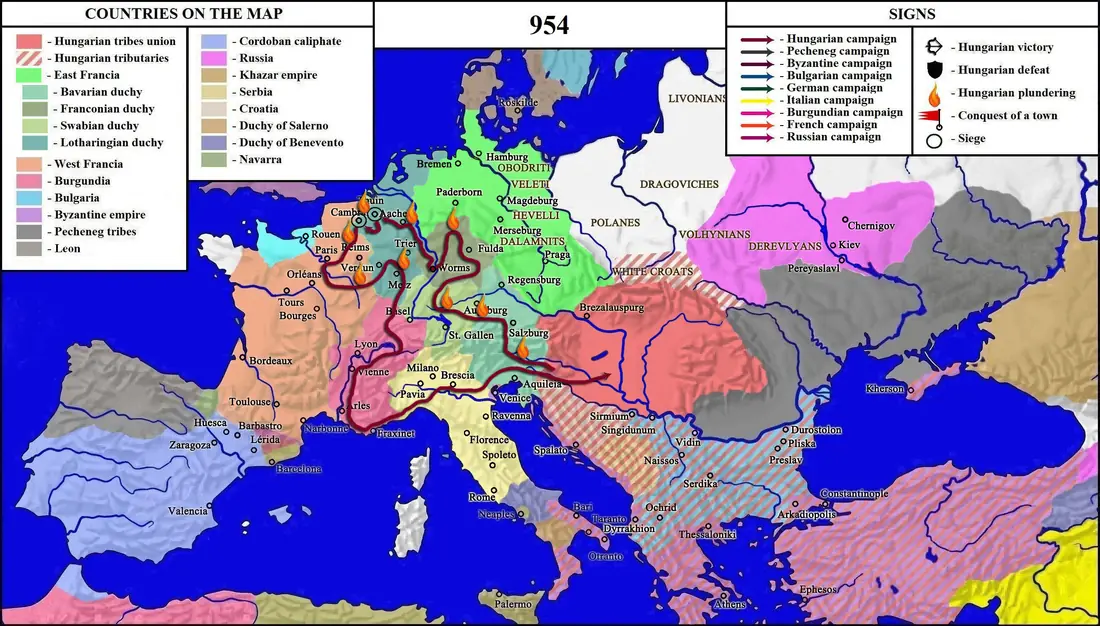
For half a century, Western Europe lived under a perpetual shadow. It wasn't just the sporadic raids; it was the sheer, terrifying unpredictability. Imagine a foe that appeared seemingly out of nowhere, rode down your defenses with a speed you couldn't match, and vanished before you could even mount a counter-attack. From the Carpathian Basin, the Magyars, horse archers par excellence, had made a brutal sport of raiding the Frankish lands, Italy, and even as far as Spain. They weren't just stealing cattle; they were burning cities, enslaving populations, and extracting tribute, leaving a trail of devastation that defined the age. This wasn't a localized skirmish; this was a systemic threat that profoundly reshaped how societies organized themselves, built fortifications, and even prayed for deliverance.

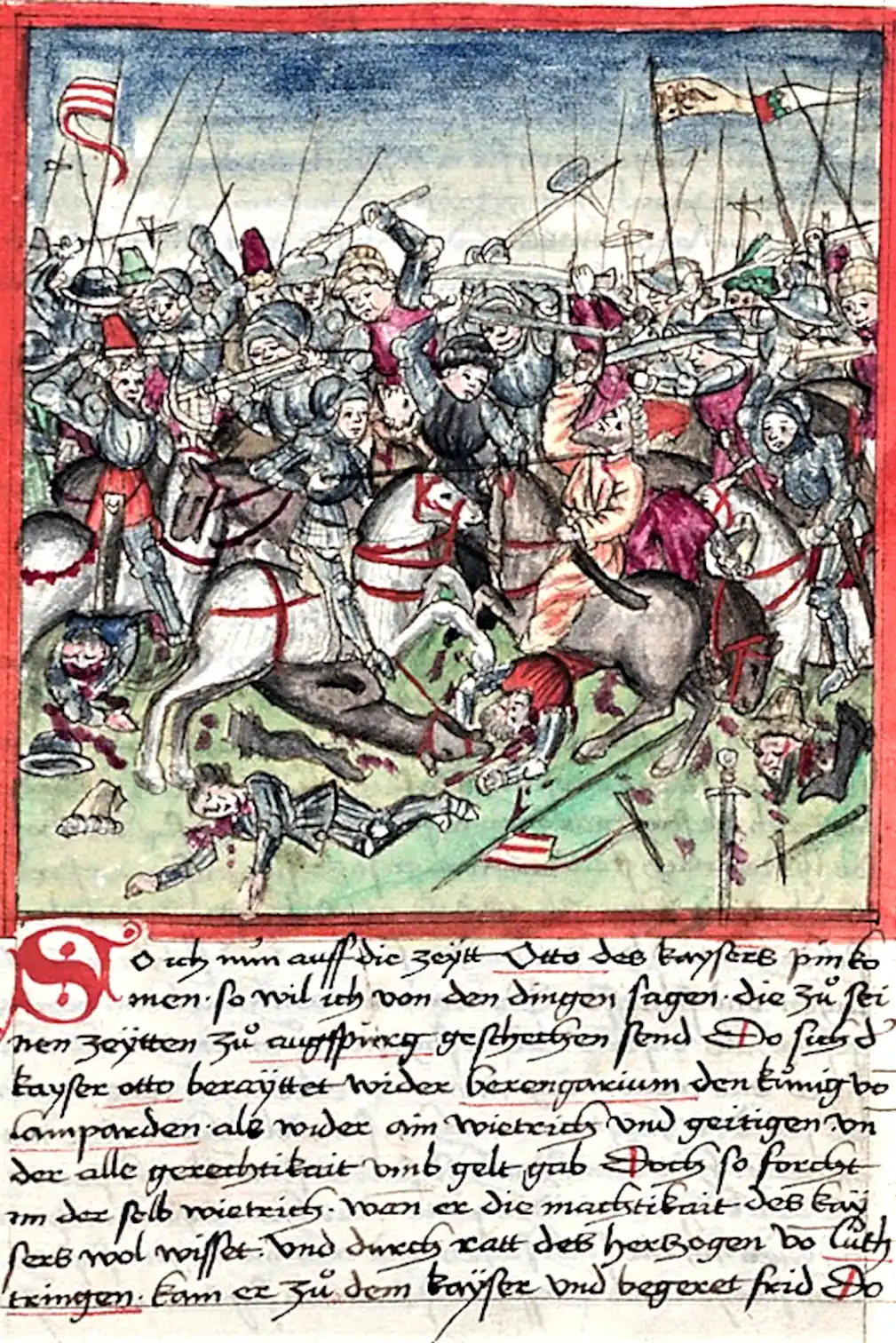
Then came August 10, 955, and the fields of Lechfeld, near Augsburg. Otto I, the future Holy Roman Emperor, wasn't just fighting another battle; he was making a stand that would determine the very survival of his nascent empire. His army, a patchwork of Saxons, Franks, Bavarians, and Swabians, was a testament to his precarious authority. But the Magyars, despite their reputation for lightning-fast incursions, had a critical weakness in pitched battles: their composite bows, while devastating at range, required a continuous supply of arrows, and they were less effective in close-quarters combat. Otto, crucially, understood this. He didn't just meet them; he outmaneuvered them, using heavily armored cavalry to break their formations and force them into a decisive, grinding engagement.

The turning point, often overlooked, wasn't just Otto's leadership, but the tactical brilliance of his lieutenants, particularly Conrad the Red, Duke of Lorraine. Conrad’s cavalry, despite having been exiled and only recently reconciled with Otto, executed a flanking maneuver that trapped the Magyar rear guard, who were attempting to loot the German baggage train. This wasn't a spontaneous act of heroism; it was a disciplined, coordinated strike that turned the tide. The Magyars, seeing their escape route cut off and their famous mobility negated, broke and fled. It was a rout, a massacre even, as the German cavalry pursued them relentlessly across the Lech River, drowning many in the swollen currents. Contemporary accounts speak of the rivers running red, and the scale of the defeat was absolute. Their leaders, including Bulcsú and Lél, were captured and executed in Augsburg, their bodies displayed as a grim warning.

Otto the Great Halts Magyar Invasions at Lechfeld — Lechfeld, Germany
Image: hu:User:Csanády · CC BY-SA 3.0

The immediate aftermath was profound. The Magyars, having lost an estimated 5,000-10,000 warriors – a significant portion of their fighting strength – never launched another large-scale raid into Western Europe. The terror that had gripped the continent for fifty years simply... ceased. It was as if a switch had been flipped. For communities that had spent generations building watchtowers and hiding their valuables, this was nothing short of miraculous. The defensive structures that had proliferated across the landscape, from fortified monasteries to motte-and-bailey castles, slowly began to feel less like necessities and more like relics of a bygone era. The psychological impact alone was immense; people could finally plant crops without fearing their immediate destruction, travel with a modicum of safety, and rebuild their lives.

But the ripple effects extended far beyond just security. Otto I, the victor of Lechfeld, solidified his authority not just over his dukes but over the entire realm. He was hailed as a savior, a new Charlemagne, and his victory directly paved the way for his coronation as Holy Roman Emperor in 962. This wasn't just a win; it was a mandate. The consolidation of power in Central Europe, directly attributable to the cessation of Magyar raids, allowed for a period of relative stability and cultural flourishing. Monasteries could dedicate themselves to scholarship rather than defense, trade routes reopened, and nascent urban centers could grow. The Magyars themselves, shocked by their catastrophic defeat, slowly began to settle, adopting Christianity and founding the Kingdom of Hungary by the end of the century. They transitioned from Europe's scourge to a foundational kingdom, a transformation that might never have happened without that devastating day on the Lechfeld. The irony, of course, is that the very people who had forced Europe to militarize inadvertently created the conditions for a more unified, and ultimately more peaceful, political landscape, all because one king finally figured out how to fight horse archers in open country.

Otto the Great Halts Magyar Invasions at Lechfeld — Lechfeld, Germany
Image: Sylvain1975 · CC BY-SA 4.0

Source: en.wikipedia.org/wiki/Battle of Lechfeld

Use the arrow keys to move between days

Browse the full archive →