Louis XVI Arrested, Declared Enemy of the People

The locksmith king is no longer a king. He is Louis Capet, citizen. And on this sweltering August 13th, 1792, the Temple looms, a medieval fortress in the heart of Paris, ready to swallow him whole. Just three days prior, the Tuileries Palace, his last fragile stronghold, was stormed by an enraged populace. Now, the National Assembly has stripped him of his title, suspended his authority, and moved him and his family from the relative comfort of the Luxembourg Palace to this grim, imposing tower.
At precisely 6 AM, the delegation arrives. Pétion, the mayor of Paris, leads the procession, accompanied by Manuel, the procureur of the Commune, and Santerre, commander of the National Guard. They are not here to negotiate. They carry the decree of the National Assembly, an instrument of political will forged in the crucible of revolution.
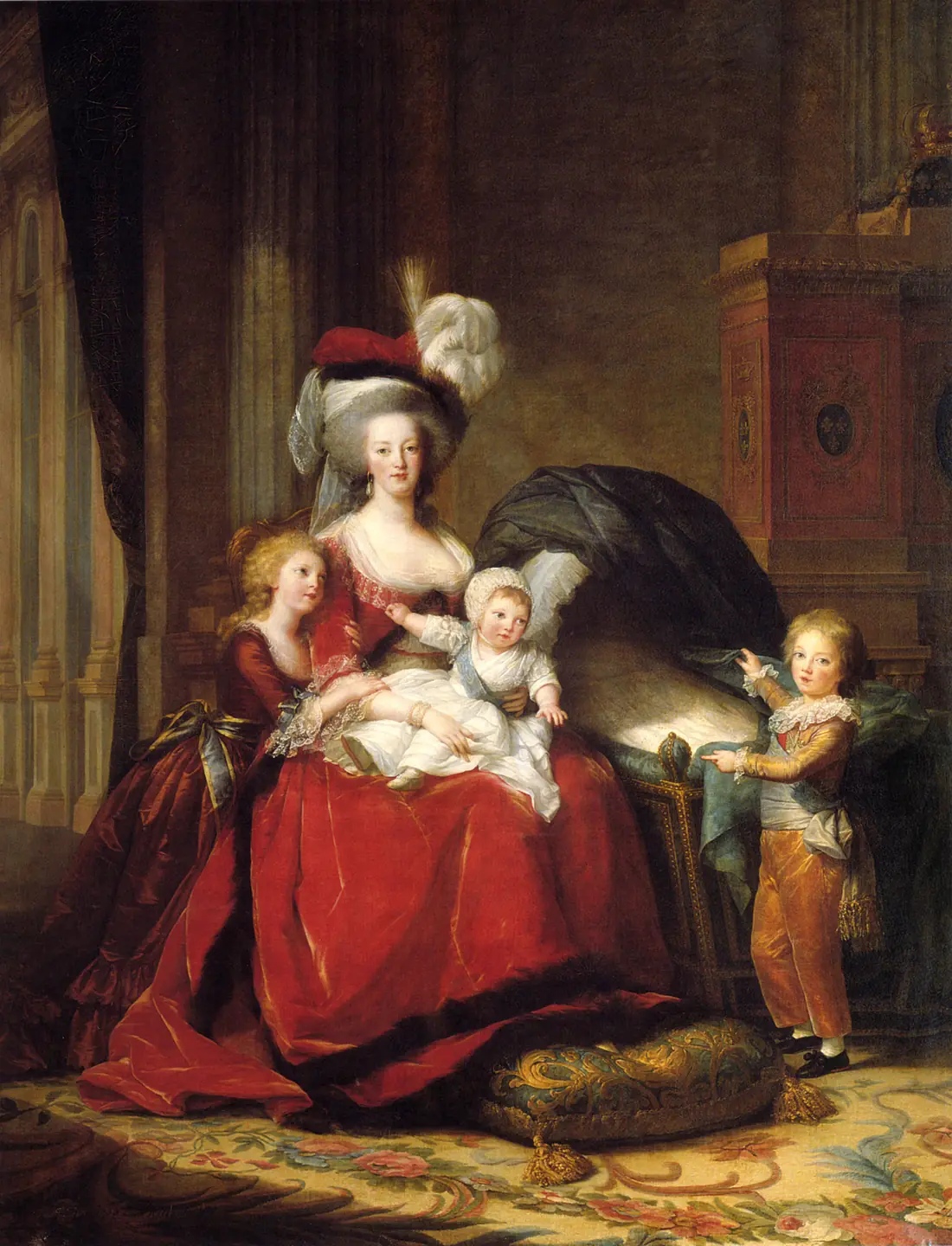
Louis XVI, still wearing the plain clothes he adopted after the Tuileries fell, stands before them. His queen, Marie Antoinette, their children, and his sister Elisabeth are present. The air is thick with unspoken tension, a silent acknowledgment of the precipice they all stand upon. Manuel begins to read the resolution aloud. It is curt, unambiguous: the former monarch and his family are to be detained in the Temple prison. The term “enemy of the people” isn't yet legally affixed, but the implication hangs heavy in the humid air.

Louis, surprisingly calm, listens. He knows this is not a request; it is a command. His eyes, usually placid, dart to his family. Marie Antoinette’s face is a mask of controlled despair. The children, still young, seem confused by the gravity surrounding them. The procession forms, the guards are at attention. They are no longer protecting him; they are containing him. The journey from the Luxembourg to the Temple is short, but it is a journey from symbolic power to absolute powerlessness.
Upon arrival, the family is led first to the smaller, less secure Little Tower. A temporary arrangement. But even here, the transition is stark. The luxury of the Tuileries, even the forced comfort of the Luxembourg, is gone. The heavy, iron-bound doors clang shut behind them. Within hours, workmen begin to reinforce the structure, bricking up windows, adding locks, securing every possible escape route. The former King of France is now prisoner number one, and the nation wants to ensure he stays that way.
This isn't merely a change of address; it's the physical manifestation of the end of a thousand-year monarchy. Louis, who once commanded millions, now finds his world reduced to a few square meters of stone. The irony, of course, is that his previous attempts to escape Paris, most notably the botched flight to Varennes, accelerated this very outcome. He had sought freedom, and instead, found himself behind walls more formidable than any he had known.
His guards, once subjects, now address him simply as “Louis.” He is allowed few personal effects, his royal regalia replaced by the uniform of a prisoner. The National Assembly, having voted unanimously for his imprisonment, has effectively sealed his fate. The fall from divine right to common criminal is complete, and the guillotine, though not yet erected, already casts a long shadow over the Temple's ancient stones.
Source: en.wikipedia.org/wiki/Louis XVI