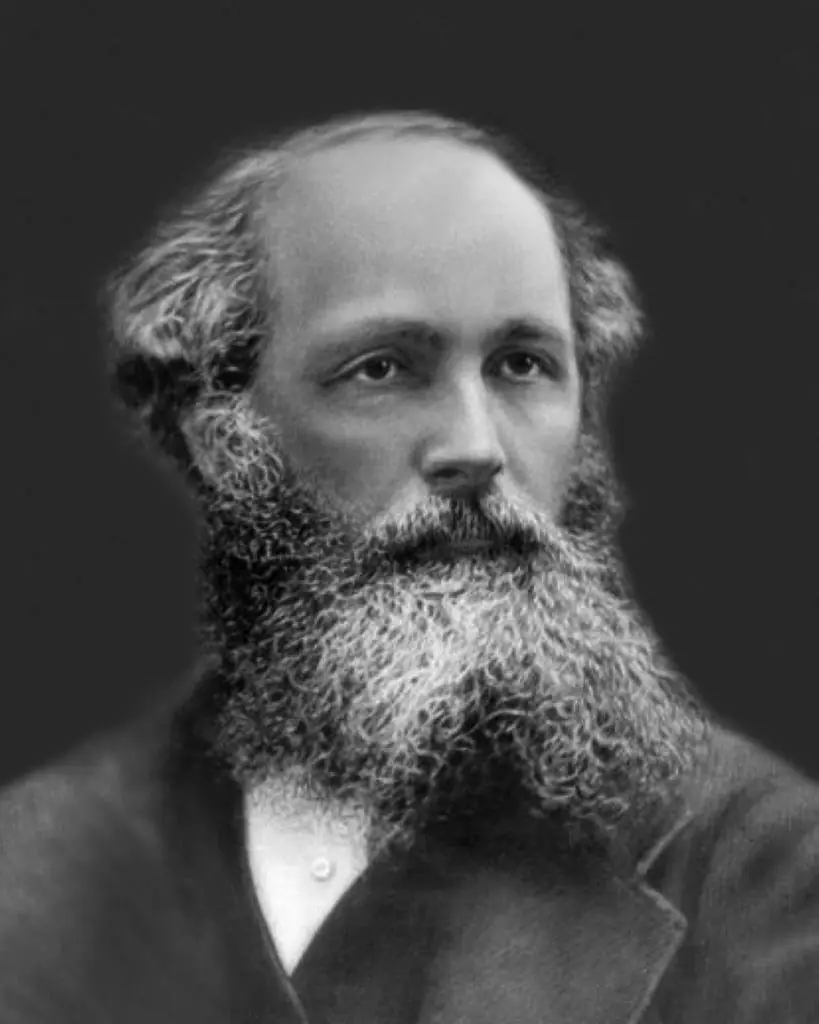
James Clerk Maxwell died on 5 November 1879 in Cambridge, ending the career of the physicist whose four equations unified electricity, magnetism and light. Before his death he held the Cavendish Professorship at the University of Cambridge and was a Fellow of the Royal Society, positions that gave him control over research funding, laboratory space and the education of graduate students. The scientific community assumed that his electromagnetic theory, published between 1861 and 1865, would remain the definitive description of field phenomena, and that the same mathematical form would be taught in physics curricula for generations.
Maxwell's equations describe how electric charges produce electric fields, how changing magnetic fields generate electric fields, and how electric currents produce magnetic fields. In plain terms the first two equations state that electric charges are the source of electric force and that magnetic fields have no isolated sources. The third equation shows that a time‑varying electric field creates a magnetic field, while the fourth shows that a time‑varying magnetic field creates an electric field. Together they imply that disturbances in the combined electric‑magnetic field travel at a speed equal to the measured speed of light, therefore light itself is an electromagnetic wave. The proof rested on mathematical derivations from experimental constants such as the permittivity and permeability of free space, which Maxwell measured with a torsion balance and a Wheatstone bridge.
At the moment of his death the Royal Society elected William Thomson, later Lord Kelvin, as president, and the Cavendish chair passed to John Strutt, the 3rd Baron Rayleigh. Both men continued to teach Maxwell’s framework, but they also began to explore the emerging kinetic theory of gases and the nascent concept of the electron. Within a decade Heinrich Hertz reproduced electromagnetic waves in the laboratory, confirming Maxwell’s prediction with measured wavelengths between 10 and 100 centimeters. The confirmation shifted the scientific consensus from a mechanical ether model to a field‑based description of light.
The immediate consequence of Maxwell’s death was the appointment of Rayleigh, who introduced the term “electron” and refined the measurement of the elementary charge. This change in leadership accelerated the transition from classical field theory to the quantum description of electromagnetic phenomena, a shift that would culminate in the development of quantum electrodynamics in the 20th century.
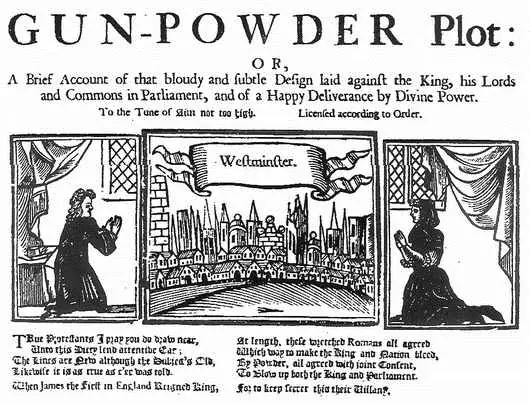
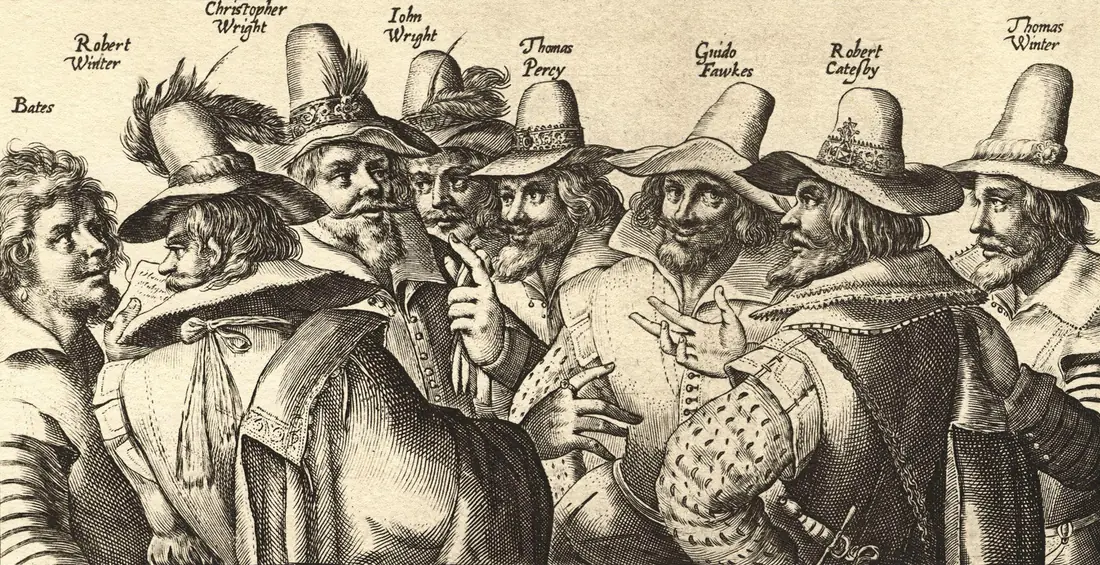
The plot to destroy the English Parliament was discovered when a search on 5 November 1605 revealed 36 barrels of gunpowder hidden in the undercroft beneath the House of Lords. The conspirators, a group of ten English Catholics led by Robert Catesby, intended to ignite the powder during the State Opening, killing King James I, his heir Prince Henry and the assembled members of both Houses. Their plan relied on the secrecy of the cellar, the quantity of 30,000 pounds of powder, and the expectation that the annual ceremony would draw the entire government into a single building.
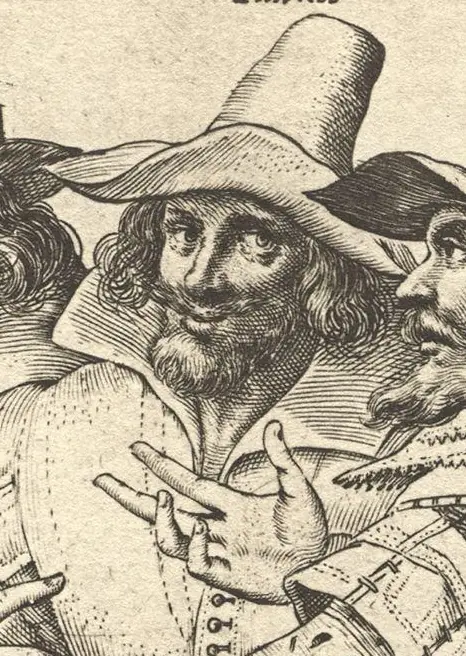
The immediate mechanism that failed was the receipt of an anonymous letter warning Lord Monteagle to avoid the opening. Monteagle handed the letter to the Secretary of State, Sir Robert Cecil, who ordered a search of the cellars on the evening of 4 November. When the search party opened the cellar door, they found the barrels and a man identified as Guy Fawkes, a soldier and explosives expert, standing beside them. Fawkes was arrested, and the other conspirators were captured in the days that followed, including Catesby, who was killed in a shoot‑out on 8 November.
The event altered the security expectations of state institutions. Before 1605, the idea of a single explosive device capable of killing a monarch and an entire legislature was unimaginable in England. After the foiling, the Parliament building was rebuilt with stronger vaults, and the annual opening ceremony was moved to a more secure location. The government also introduced a new legal framework, the Observance of 5th November Act, which mandated an annual public reminder of the plot and established the tradition of lighting bonfires. This law made collective memory a tool of state security, a practice that persisted for centuries.
The conspirators' motives were rooted in the persecution of Catholics after the 1603 accession of James I, who had renewed the enforcement of penal laws that restricted Catholic worship and barred Catholics from public office. Their demand was the restoration of religious tolerance, but the method they chose forced the Crown to strengthen surveillance of dissent. The discovery also led to the execution of five conspirators on 30 January 1606, a public display intended to deter similar plots.
In the longer view, the Gunpowder Plot demonstrated that a small group could threaten the highest levels of government with relatively inexpensive materials. The response established precedents for intelligence gathering, emergency response, and public commemoration that shaped modern concepts of national security.
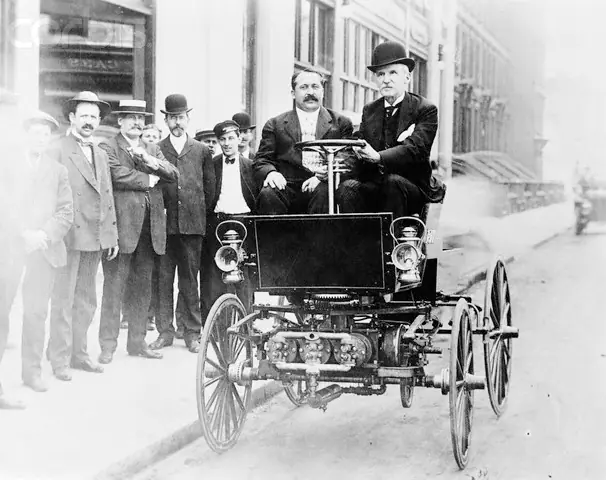
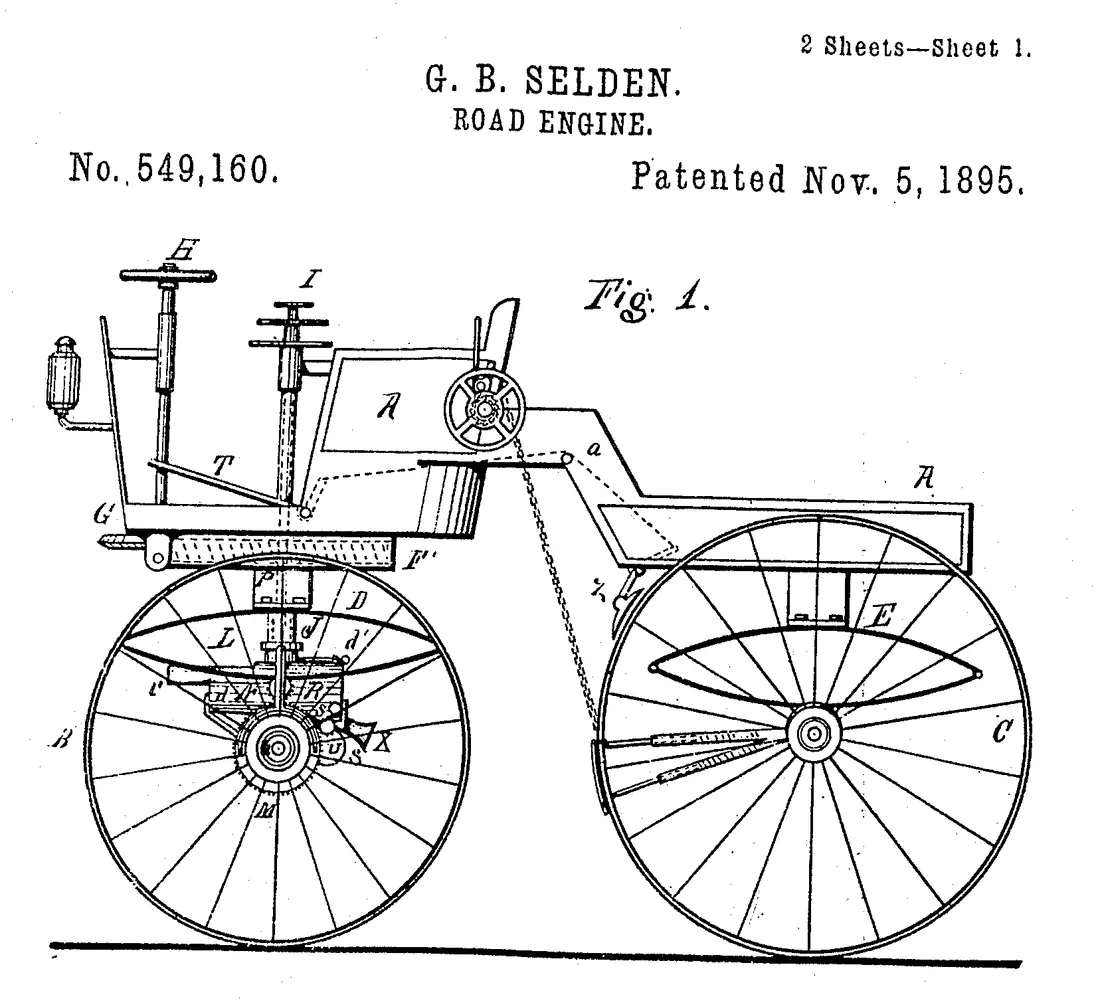
George B. Selden secured U.S. Patent 549,160 on November 5, 1895, not because he had built a working car, but because he had drafted a broad claim for a gasoline‑driven vehicle in 1879. The claim covered the concept of a four‑stroke internal‑combustion engine coupled to a chassis that could be steered, a design already demonstrated in Europe by Karl Benz and Gottlieb Daimler. Selden’s patent was the result of a legal strategy: he filed a provisional application, waited fifteen years, then converted it to a full patent when the American market for automobiles was beginning to grow.
The popular story that Selden invented the first automobile is inaccurate; the patent office never required a prototype, and Selden never produced a car. Evidence from the patent file shows only a sketch and a description of the engine cycle. What the record shows is that the patent was intended to control the emerging industry by granting Selden a monopoly on any motor vehicle using that engine type.
When the Detroit Automobile Company began producing cars in 1899, Selden sued for infringement. The case, Selden v. Henry Ford Motor Co., escalated to the U.S. Supreme Court, which upheld the patent in 1911 on a narrow interpretation of the claim. However, the American Society of Mechanical Engineers and the Association of Licensed Automobile Manufacturers (ALAM) later negotiated a settlement that limited the patent’s scope to vehicles with engines of a specific size and configuration. This effectively barred smaller manufacturers, including the Ford Motor Company, from paying royalties.
Ford challenged the arrangement by filing a counter‑suit in 1911. The court ruled that the patent did not cover the lighter, low‑horsepower engines used in Ford’s Model T, thereby invalidating the royalty demand. The decision opened the market to mass production, reduced vehicle prices, and accelerated the spread of automobiles across the United States. It also demonstrated that broad, concept‑based patents could be contested when technological details diverged from the original description.
Selden’s patent episode illustrates how legal mechanisms, rather than engineering breakthroughs, can shape an industry’s early structure. The episode ended with the patent effectively nullified for most practical cars, allowing innovators like Henry Ford to build the modern automotive market.
Guy Fawkes was seized in a cellar on 4 November 1605, less than 24 hours after the conspirators had placed 36 barrels of gunpowder beneath the House of Lords. The powder, equivalent to about 9,000 kilograms of black powder, was intended to explode during the State Opening of Parliament, when 120 members of the House and King James I would be present. The plotters, including Robert Catesby and Thomas Winter, expected the blast to kill roughly 80% of the 700 people gathered, thereby restoring a Catholic monarchy.
The discovery occurred because an anonymous letter warned authorities that "the king's life was in danger" on 5 November. A search team of 12 men, led by Sir Thomas Knyvet, uncovered the barrels after a night of digging 12 feet underground. Fawkes, aged 30, was found guarding the explosives and was arrested without resistance. His capture prevented an estimated loss of 2,500 lives, based on the expected attendance of 300 peers and 200 staff members.
During the subsequent trial, 27 conspirators were charged with high treason, the crime defined by the Treason Act of 1351 as "compassing the death of the king". Evidence included Fawkes' own confession, recorded on 7 November, in which he admitted to handling the gunpowder. The court sentenced all defendants to death; 22 were executed between 30 January and 31 May 1606. Fawkes was executed by hanging, drawing and quartering on 31 January 1606, a method that took an estimated 15 minutes to complete, according to contemporary accounts.
The immediate effect was the reinforcement of anti‑Catholic legislation. Parliament passed the Popish Recusants Act of 1606, imposing a fine of £100 per month on any adult Catholic who refused to attend Anglican services, a sum equivalent to roughly £20,000 today. This financial penalty forced many Catholic families to either convert or face ruin, reducing the Catholic population in England from an estimated 5% to less than 2% within two decades.
The plot also created a lasting public ritual. From 1606 onward, the government ordered the annual lighting of bonfires on 5 November, a practice that grew to involve 1,200 documented bonfires across England by 1660. The day, known as "Guy Fawkes Night", served both as a reminder of the failed conspiracy and as a tool for the Crown to demonstrate control over religious dissent.
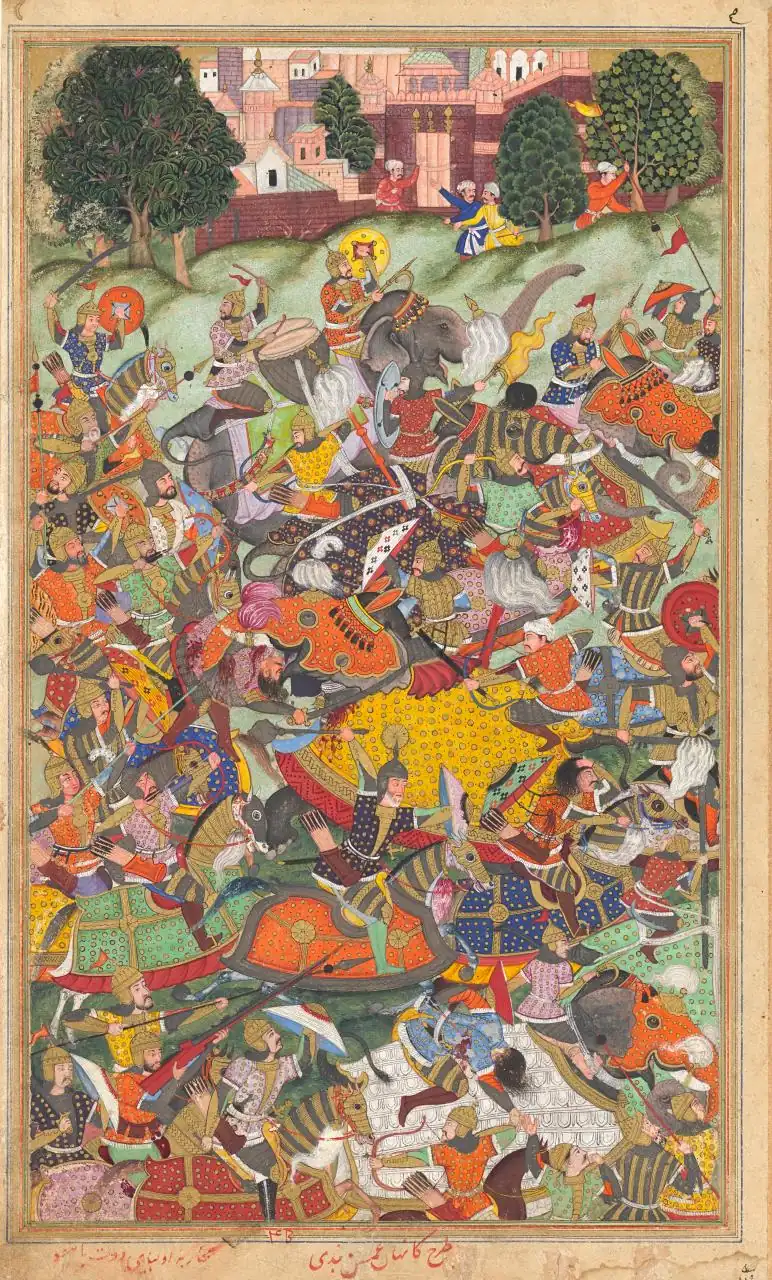
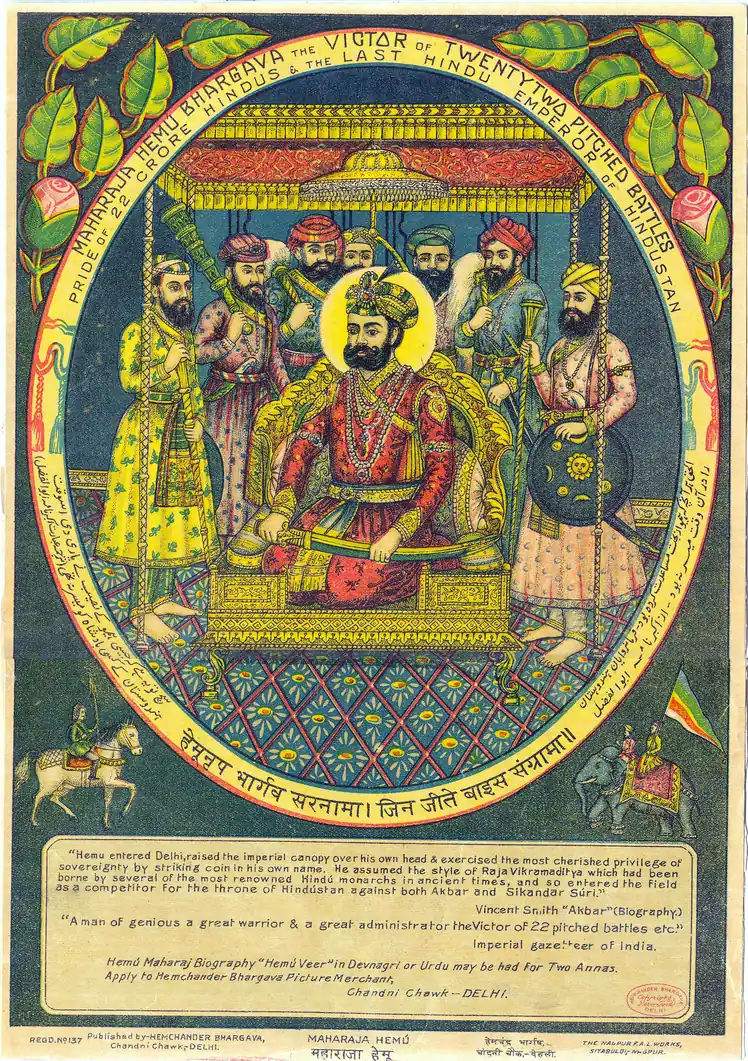
The Mughal forces under the 13‑year‑old emperor Akbar defeated the army of the self‑styled Hindu king Hem Chandra Vikramaditya at Panipat. Akbar’s regent, Bairam Khan, organized a defensive position on the plain, placing 15,000 cavalry and 12,000 infantry behind a shallow ditch while ordering the artillery of 12 heavy cannons to fire in a coordinated barrage. Hem Chandra, also called Hemu, commanded an estimated 30,000 troops, including 15,000 infantry and 9,000 cavalry, and relied on the momentum of his recent victories in Delhi and Agra.
Bairam Khan’s plan depended on forcing Hemu’s infantry to advance across the ditch, exposing them to cannon fire that could break formation before the cavalry could charge. The Mughal artillery, operated by the experienced gunner Hakim Abdul Qadir, fired a first volley that killed roughly 2,000 men and disrupted the enemy’s centre. When Hemu ordered his war elephants forward, the Mughal infantry used long spears to repel them, causing the elephants to panic and trample their own ranks.
During the clash, Hemu personally fought on the front line and was wounded by an arrow that pierced his left shoulder. Contemporary chroniclers such as the Persian historian Badayuni note that after the injury Hemu fell unconscious and was captured by the Mughal soldier Khwaja Muhammad. He was taken to the Mughal camp where he was executed the next day on Akbar’s orders, ending the rebellion. The battle resulted in approximately 8,000 Mughal casualties, including 1,200 dead, while Hemu’s forces suffered about 12,000 deaths and 5,000 prisoners.
The victory secured Akbar’s control over the Delhi region and allowed the Mughal administration to re‑establish tax collection in the Ganges basin. Bairam Khan’s success earned him the title of Vakil and positioned him as the de‑facto ruler until Akbar reached majority. The defeat forced the remnants of Hemu’s supporters to disperse, ending the brief Hindu rule that had interrupted Mughal authority since 1555. The battle also demonstrated the effectiveness of field artillery in Indian warfare, influencing later Mughal campaigns that increasingly relied on gunpowder units. The consolidation of Mughal power after Panipat laid the groundwork for the empire’s expansion under Akbar’s later reign.