Daily History
Technology

Apollo and Soyuz Dock in Orbit

Earth orbit
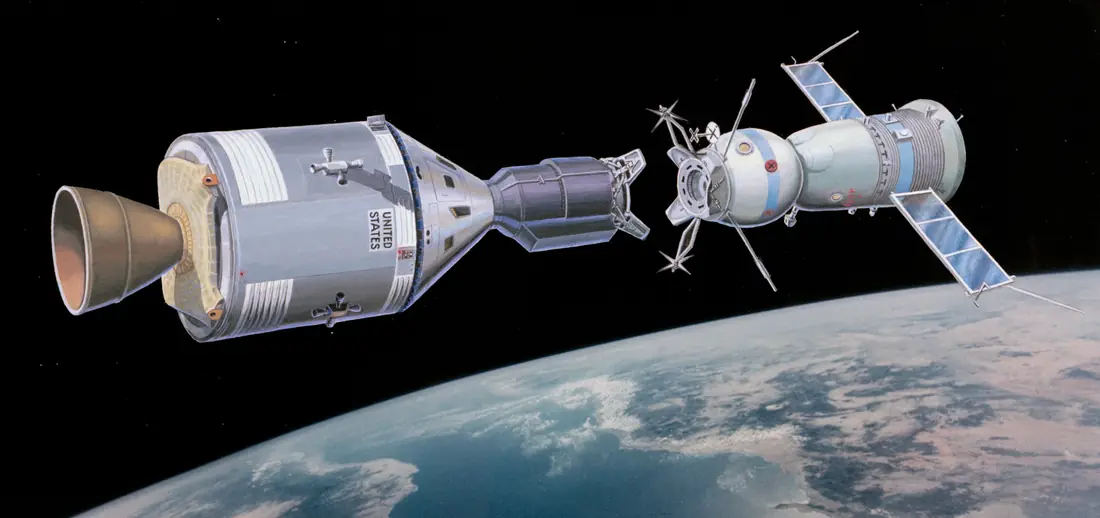
Apollo and Soyuz Dock in Orbit — Earth orbit
Image: R. Bruneau · Public domain

Two spacecraft approached each other in the vacuum above Earth at a relative speed of 1 meter per second—slow enough that a person could walk alongside them, fast enough that any miscalculation would mean metal folding into metal, men becoming debris.

It was July 17, 1975, 1:19 p.m. Moscow time. Thomas Stafford, a 45-year-old Air Force test pilot from Oklahoma, looked through the window of the Apollo command module and saw the Soyuz 7K-TM spacecraft for the first time in person. Its solar panels caught the sun like wings. "Beautiful," he said into the radio. On the other side of that void, Alexei Leonov—the first human to walk in space, now 41, a Soviet test pilot with the calm of a man who had already survived the unsurvivable—maneuvered his ship with the precision of someone docking boats in a harbor, except the harbor was infinite and there was no second chance.

What made this moment genuinely strange was not the politics, though the Cold War was still very much alive. It was the engineering problem that almost nobody noticed: the two spacecraft couldn't actually dock to each other. Not directly. Their hatches faced different directions. Their docking mechanisms were incompatible—Soviet equipment built in Moscow, American equipment built in Houston, and neither side had any intention of changing their designs. So NASA and the Soviet Space Agency built a third thing: an airlock module, a small cylindrical tunnel that would sit between the two ships like a translator.
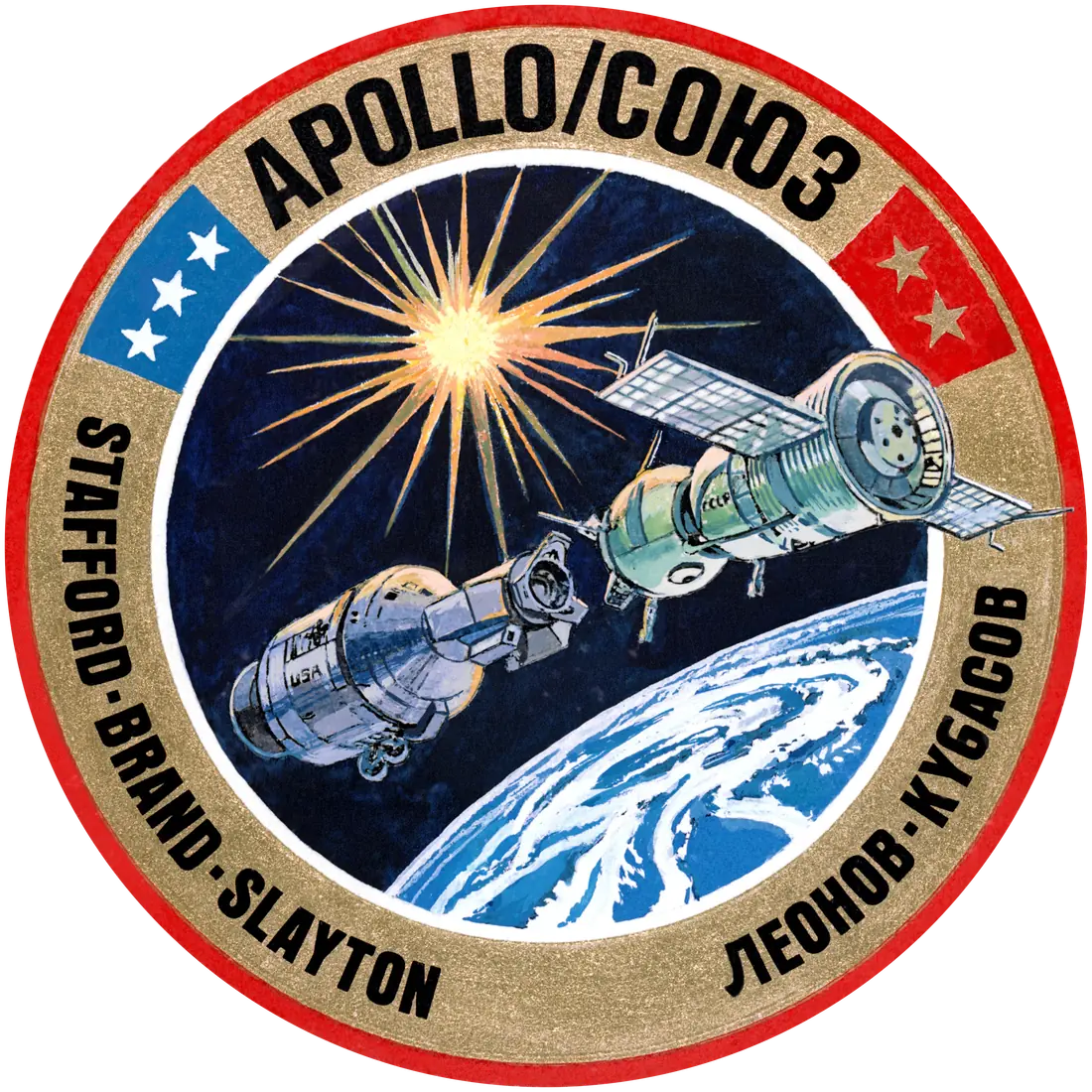
Apollo and Soyuz Dock in Orbit — Earth orbit
Image: NASA · Public domain

But there was another problem, this one chemical. Apollo ran on pure oxygen at a pressure of 10.3 pounds per square inch. Soyuz ran on a nitrogen-oxygen mix at 10.2 psi. If you opened a door between them, oxygen-rich air from Apollo would flood into Soyuz, and the nitrogen-oxygen atmosphere would flood back, and the two would mix in ways that made engineers lose sleep. The solution: gradually equalize the pressures, pump out one atmosphere and pump in another, until both ships were breathing the same air.

Stafford and Leonov had trained together for eighteen months. They spoke each other's languages badly, which somehow made them honest with each other. Leonov had survived a near-fatal spacewalk in 1965 when his suit inflated in the vacuum and he had to dump air from his suit to squeeze back through the airlock. Stafford had flown to the moon twice. These were men who understood that space does not forgive mistakes.
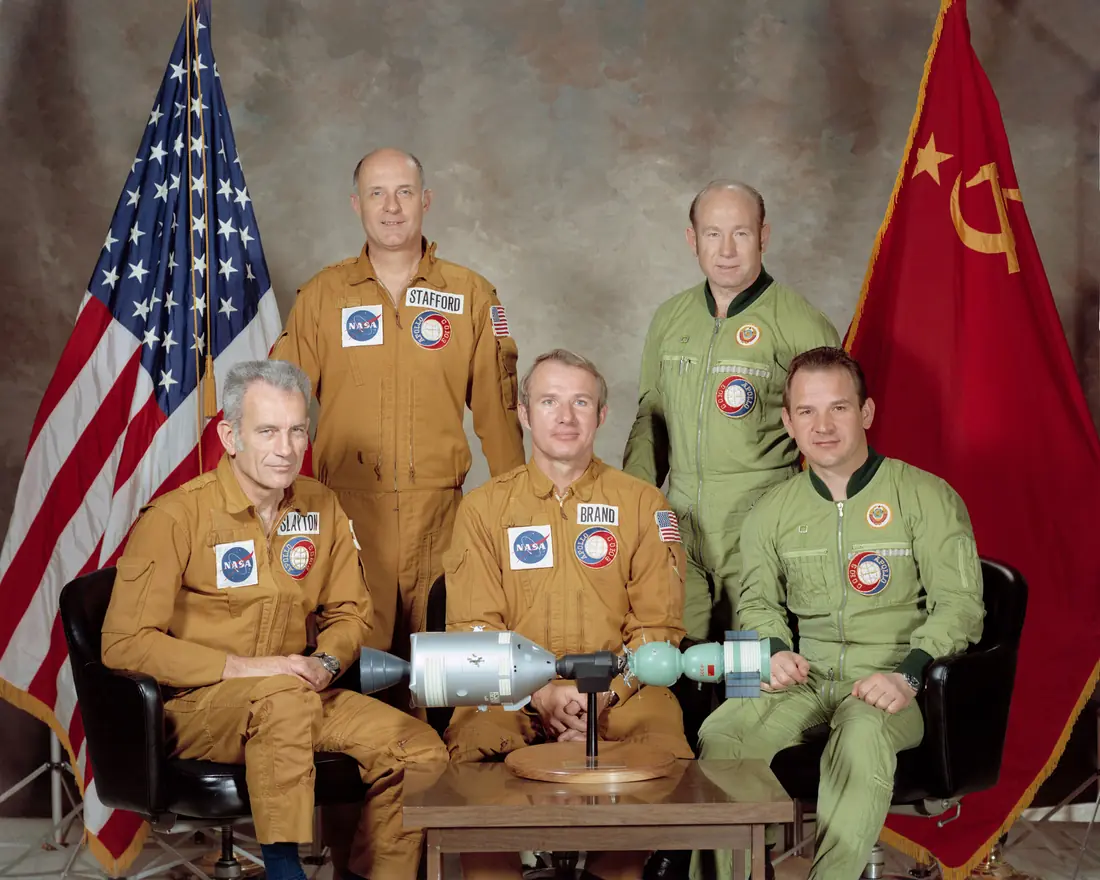
Apollo and Soyuz Dock in Orbit — Earth orbit
Image: Adam Cuerden · Public domain

The docking took five hours. They had to align not just in three dimensions but in rotation—imagine threading a needle while both you and the needle are spinning. When the capture latches engaged, there was no sound in space, but Stafford felt it: a gentle, definitive clang transmitted through the metal hull into his bones. Two nations, two ideologies, two completely different ways of building spacecraft, were now touching.

What nobody predicted: the moment would mean almost nothing. The mission lasted ten days. The crews exchanged gifts and meals and awkward photographs. Then they undocked and went home, and the Cold War continued exactly as before. The Apollo-Soyuz Test Project was the only crewed American-Soviet spaceflight for twenty years. By the time they flew together again, the Soviet Union had ceased to exist.
Source: en.wikipedia.org/wiki/Apollo-Soyuz Test Project

War & conflict

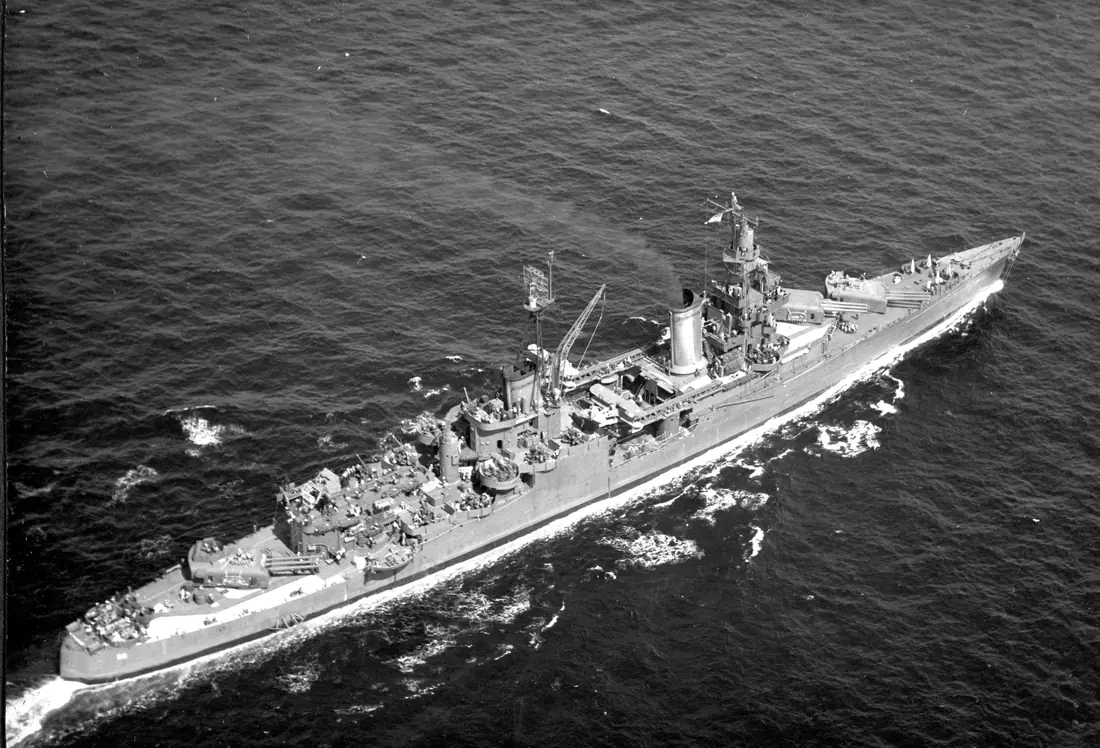
USS Indianapolis Sinks in Pacific

Philippine Sea

USS Indianapolis Sinks in Pacific — Philippine Sea
Image: Unknown authorUnknown author · Public domain

The men treading water in the Philippine Sea had no idea they were already dead. They just didn't know it yet.

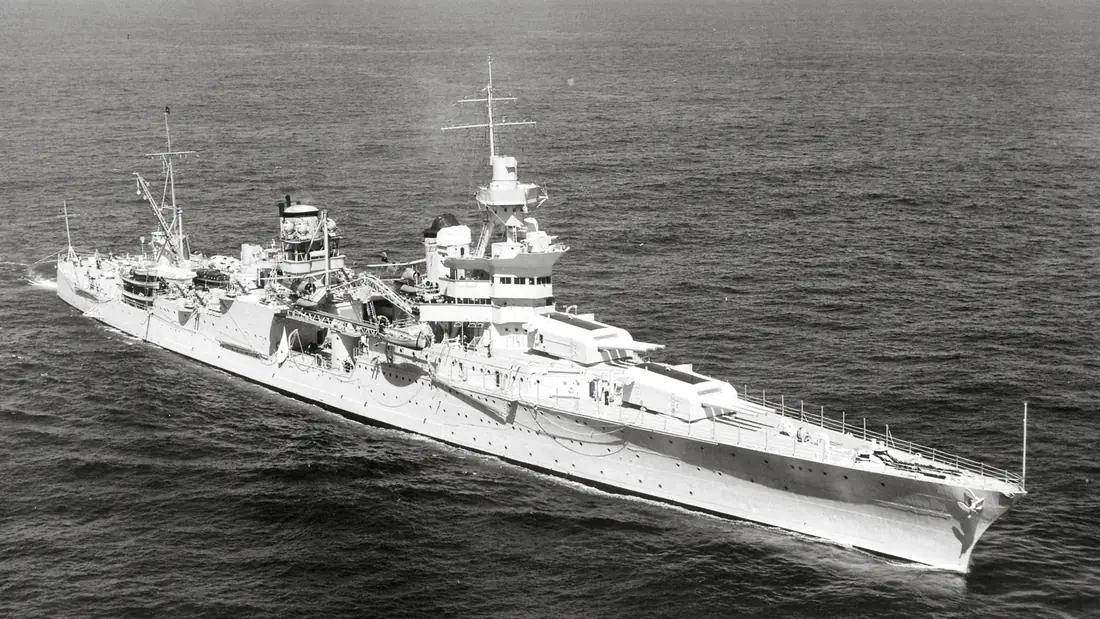
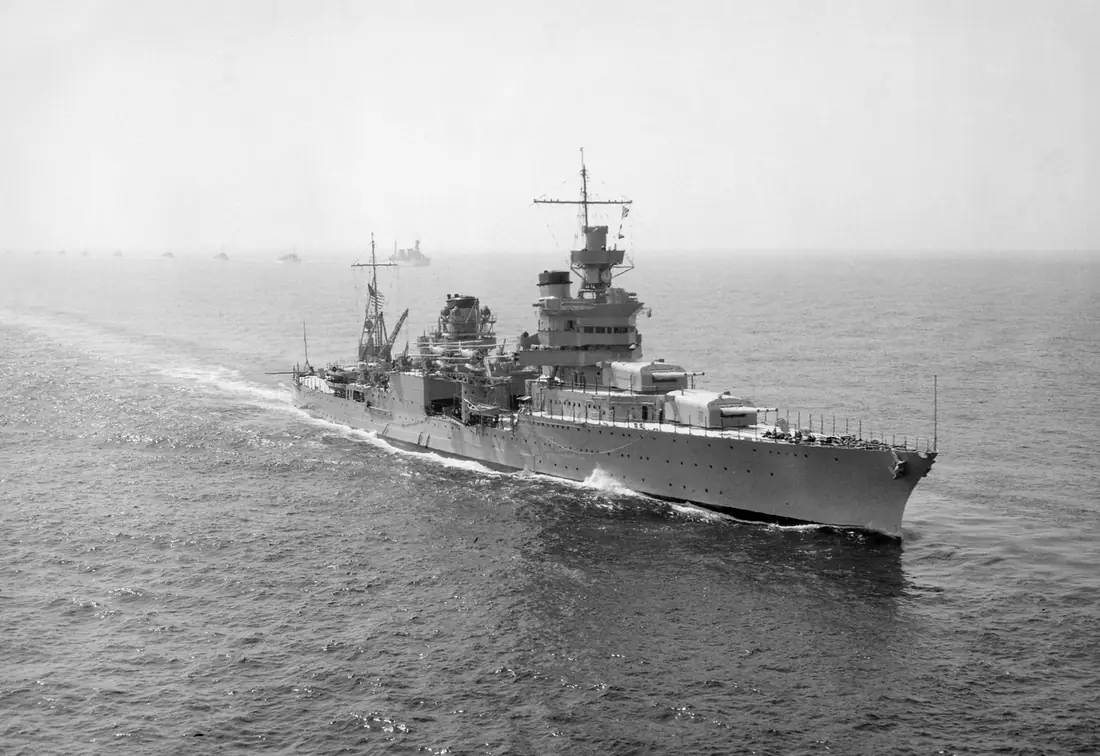
On the night of July 30, 1945—not the 15th, as the calendar would later insist—the USS Indianapolis, a heavy cruiser 610 feet long and bristling with guns, took a Japanese torpedo through the starboard side. The ship had just delivered the uranium core for the atomic bomb that would incinerate Hiroshima in twelve days. It was, in other words, the most important cargo ever to cross an ocean, and it had arrived safely. The Indianapolis turned toward Guam for routine repairs, running alone, no escort, no zigzag pattern to dodge submarines. Command believed the area was secure.

The I-58, a Japanese submarine captained by a 29-year-old named Hashimoto, disagreed.

Two torpedoes hit. The first tore open the bow. The second caught the magazines. The ship's back broke. It went under in twelve minutes—so fast that the radio operators never sent a distress signal. No one knew the Indianapolis was gone. No one was coming.

USS Indianapolis Sinks in Pacific — Philippine Sea
Image: U.S. Navy photo 80-G-425615 · Public domain

Of the 1,196 men aboard, 900 made it into the water. What happened next was not combat. It was mathematics applied to human bodies in the open ocean under a merciless sun.

The men clung to flotsam, to each other, to rafts designed for far fewer survivors. Sharks came. The water was warm enough to be comfortable and cold enough to kill—a narrow band of temperature that made hypothermia a slow, insidious thing. Men hallucinated. Some drank seawater and went mad. Some simply let go. The Navy's rescue procedures, it turned out, had a fatal flaw: they assumed a ship would send a distress call before sinking. The Indianapolis had not. For four days, the sea kept its secret.

When the rescue finally came—triggered by a routine patrol plane spotting oil slick and bodies—only 317 men were pulled from the water. Of the 900 who had made it off the ship, 579 were gone. The Indianapolis held the record for the greatest loss of life in a single U.S. Navy ship, a record it kept for decades because the Navy classified the sinking as a logistics problem, not a tragedy. The ship's captain, Charles McVay III, was court-martialed for not zigzagging—despite the fact that no one had ordered him to—and spent the rest of his life under a cloud of official blame.

USS Indianapolis Sinks in Pacific — Philippine Sea
Image: Unknown authorUnknown author · Public domain

But here is what changed: Before the Indianapolis, navies believed a large warship could operate alone in hostile waters. After the Indianapolis, that belief was dead. The ship had carried the future—literally, the uranium for atomic weapons—and the future had learned nothing from it except that the ocean keeps no promises. Within a year, carrier task forces would never move without destroyer screens. Radar became standard. Escort protocols were rewritten.

The men who died created a new kind of naval doctrine. They did not know they were writing it. They were simply trying to float.

Source: en.wikipedia.org/wiki/USS Indianapolis (CA-35)

Use the arrow keys to move between days

Browse the full archive →