Daily History
Science & discovery

Louise Brown: First Test-Tube Baby Born

Oldham, United Kingdom

Lesley Brown was 30 years old and had been trying to have a baby for nine years. Her fallopian tubes were blocked—a condition that made natural pregnancy impossible. By 1978, she had run out of options. Most doctors told her to accept childlessness. Instead, she found herself lying on an operating table in Oldham, Lancashire, while a surgeon named Patrick Steptoe threaded a needle-thin instrument through her abdomen to retrieve her eggs.

What happened next was not magic, though it felt close enough to terrify the British press. Steptoe and his partner Robert Edwards, a physiologist working in a lab across town, had figured out how to do something that seemed to violate the basic rules of human reproduction: they could take an egg from inside a woman's body, put it in a petri dish, add sperm, let it divide into an embryo, and put it back. The whole operation happened outside the body—in vitro, in glass. People called it a test tube baby, which was technically wrong but emotionally accurate: this was conception without the body doing the conceiving.

The mechanics were almost comically delicate. You had to time everything perfectly. Steptoe would watch Lesley's hormone cycles, waiting for the moment her ovaries were ready. Then he'd go in surgically—there was no ultrasound guidance then, no minimally invasive techniques. He was working blind, essentially, using a laparoscope (a tube with a light) to see inside her abdomen and a needle to extract the egg. Edwards would receive it in his lab at Bourn Hall Clinic, place it in a culture medium, and wait for the sperm to do its work. If the embryo started dividing normally, after a few days it would go back into Lesley's uterus.

They had tried this before. Dozens of times. Failed cycles, miscarriages, dead ends. Edwards and Steptoe had been collaborating since 1963, working on something most of their colleagues dismissed as impossible or immoral or both. The Catholic Church was appalled. Some geneticists worried they were creating monsters. The British medical establishment was skeptical—Steptoe wasn't even a fertility specialist; he was an obstetrician. Yet he and Edwards kept going, funded by private donations and their own obsessive belief that it could work.

On July 25, 1978, at 11:47 p.m., Louise Joy Brown was born by Caesarean section. She weighed 5 pounds 12 ounces. She was, by all measures, a completely normal baby. No mutations. No deformities. No sign that she had spent her first days in a glass dish.

The world lost its mind. Newspapers ran headlines about artificial babies and designer genetics. Right-wing politicians fretted. Religious leaders warned of abominations. In reality, Edwards and Steptoe had simply solved a mechanical problem—how to move conception from the body to the lab and back again. The mystery wasn't how to create life; it was how to move it three inches to the left.

What nobody predicted: within five years, Louise's technique would help thousands of infertile couples. Within forty, it would be routine. Within fifty, more than 10 million people on Earth would owe their existence to the thing Lesley Brown's doctors had done in Oldham. Edwards won the Nobel Prize. Steptoe died before the prize was awarded and never received recognition. Louise Brown, the girl who was supposed to be monstrous, grew up to work as a nurse and have two children of her own—naturally.

Source: en.wikipedia.org/wiki/Louise Brown

Politics & state

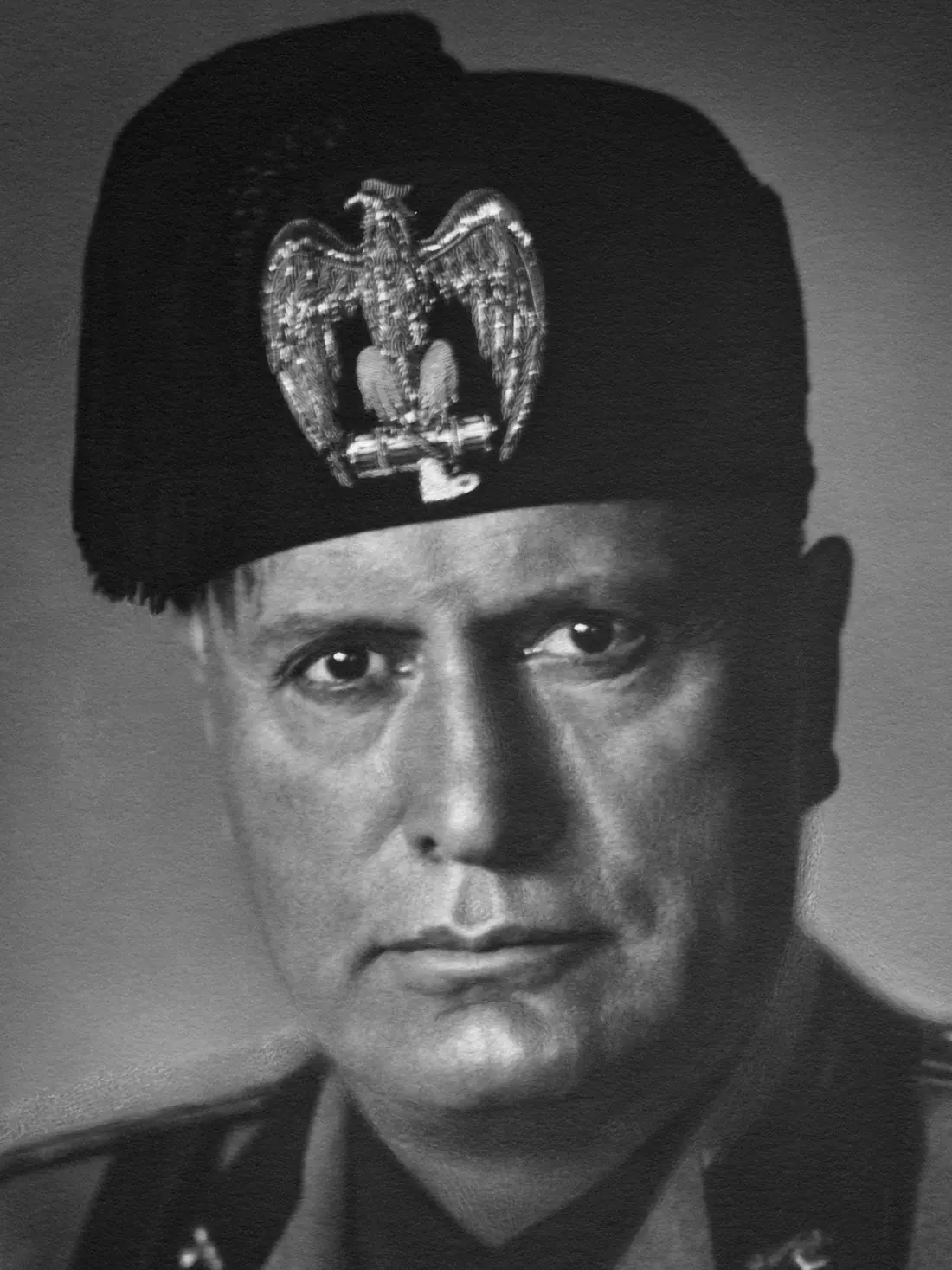
Mussolini Arrested; Fascist Italy Crumbles

Rome, Italy

Mussolini Arrested; Fascist Italy Crumbles — Rome, Italy
Image: Wikimedia Commons · Public domain

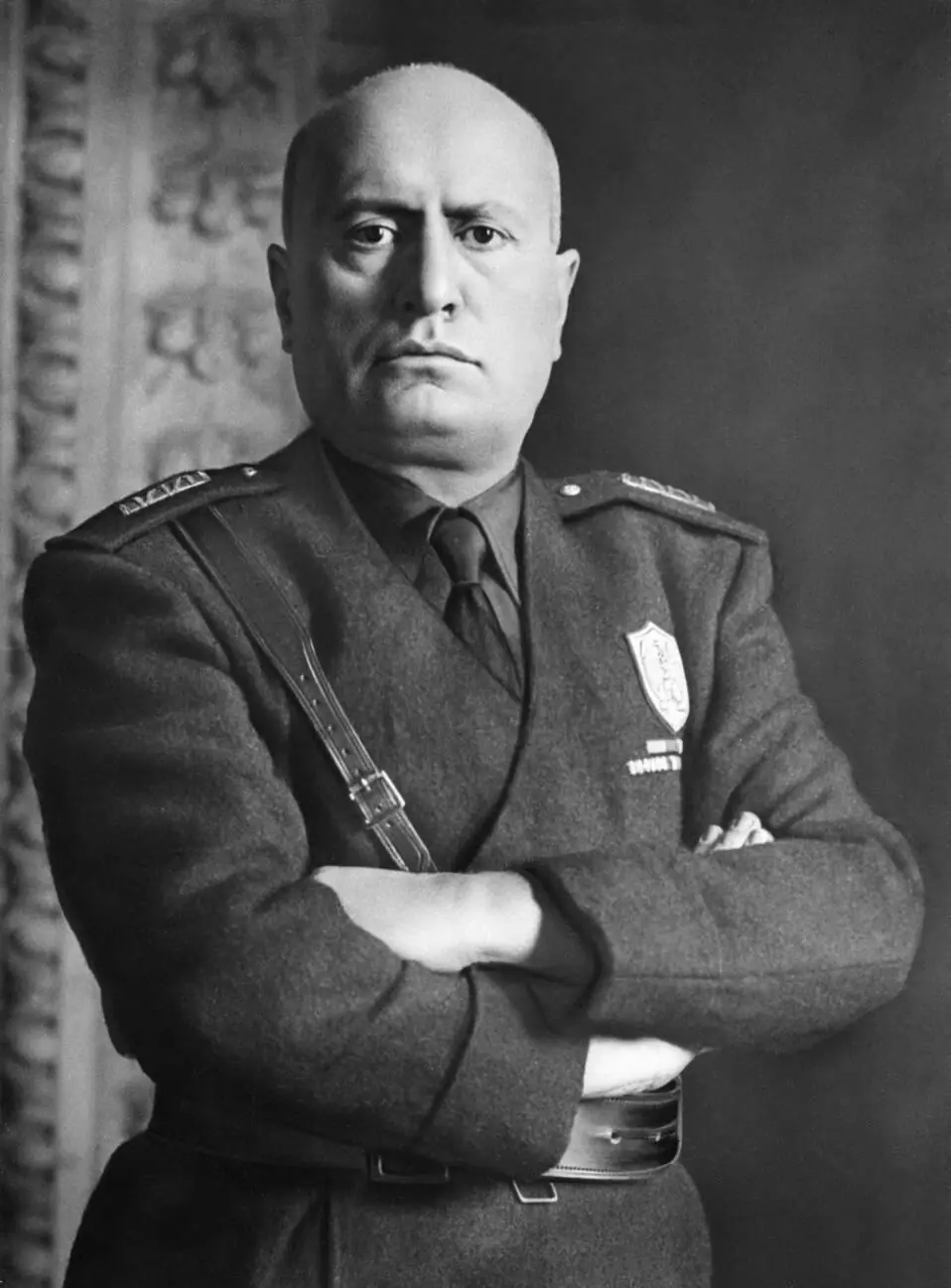
King Victor Emmanuel III had a problem: his general was too popular, and the war was lost. On the evening of July 25, 1943, Benito Mussolini arrived at the Palazzo Venezia in Rome expecting another routine meeting of the Fascist Grand Council. He left under arrest, stripped of his titles, bundled into an ambulance like medical waste. Within hours, the dictator who had ruled Italy for twenty-one years was in a cell.

What makes this moment strange is how ordinary it was. No shots fired. No dramatic confrontation. The Grand Council—a body Mussolini had created but rarely convened—simply voted him out. Even Mussolini's own son-in-law, Galeazzo Ciano, voted for his removal. The meeting lasted sixteen hours. By morning, the man who had promised to restore the Roman Empire was asking for a blanket.

But the real story isn't the fall itself. It's what that fall didn't stop.

Mussolini Arrested; Fascist Italy Crumbles — Rome, Italy
Image: Srecan · CC BY-SA 3.0

Italy switched sides almost immediately. Within weeks, Badoglio's new government signed an armistice with the Allies. The newspapers announced it on September 8. Italians who had fought in North Africa, Greece, and Russia suddenly learned they were no longer fighting. Some units simply dissolved. Others were captured by their former German allies. Of the roughly 600,000 Italian soldiers in the Balkans and Greece, perhaps 350,000 were taken prisoner by the Wehrmacht. They vanished into forced labor camps. Many never came home.

Germany, meanwhile, had already prepared for this possibility. Hitler didn't trust Mussolini, and he didn't trust Italy. The moment the armistice became public, German troops moved. They occupied Rome within days. They disarmed Italian forces with surgical precision. They rescued Mussolini from his island prison—the Allies had moved him there to keep him safe—and installed him as a puppet leader in northern Italy, running what was cynically called the Italian Social Republic. Mussolini spent his final days signing death warrants for the very men who had voted against him.

Mussolini Arrested; Fascist Italy Crumbles — Rome, Italy
Image: Unknown authorUnknown author · Public domain

The consequence was catastrophic for Italians. The country became a battlefield. From September 1943 until May 1945, the peninsula was torn between German forces retreating northward and Allied forces advancing upward. Towns changed hands repeatedly. The Allies bombed cities indiscriminately. The Germans executed civilians. Over 200,000 Italian soldiers died as prisoners of war. Hundreds of thousands of civilians perished in the fighting.

Mussolini's arrest, in other words, didn't end fascism in Italy. It fragmented it, prolonged the war, and handed the country over to occupation by both sides. The man removed from power spent his final months as a German puppet, more powerless than ever, signing documents that sealed his own fate. He was executed in April 1945, hung upside down in a town square with his mistress, his body desecrated by a mob.

The irony sits heavy: the Grand Council voted to save Italy and ended up delivering it to twenty months of hell. Badoglio, the replacement, is barely remembered. Mussolini, the arrested failure, became a footnote in a larger catastrophe. Sometimes the only thing worse than losing a dictator is the way you lose him.

Source: en.wikipedia.org/wiki/Benito Mussolini

Use the arrow keys to move between days

Browse the full archive →