Daily History
Politics & state

Odoacer Proclaimed King of Italy, Ending Western Roman Empire

Italy
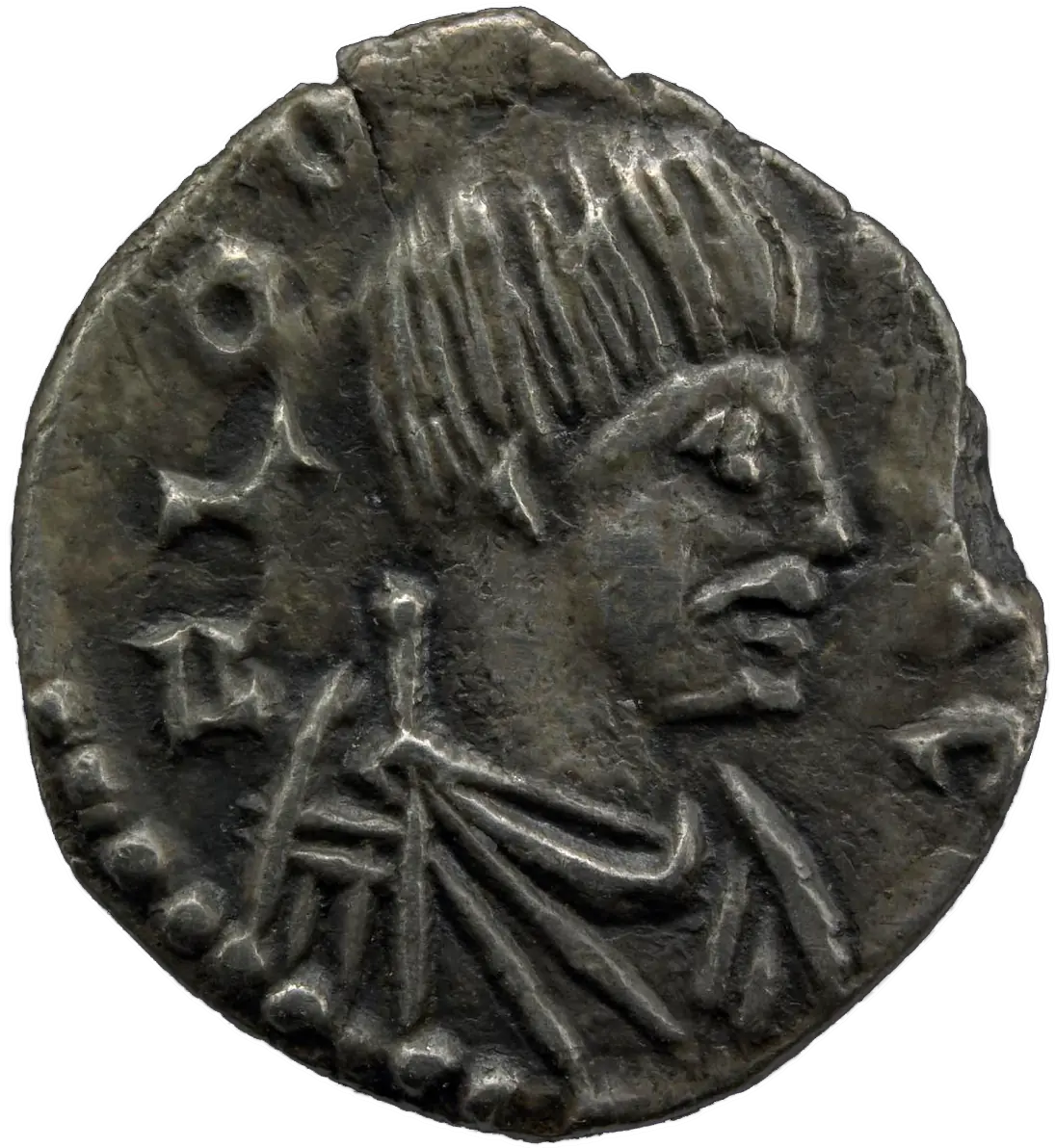
Odoacer Proclaimed King of Italy, Ending Western Roman Empire — Italy
Image: British Museum (photo) · CC BY-SA 4.0

For centuries, the Roman Empire was not merely a state; it was the state, the very architecture of civilization. Even in its diminished Western form by the late 5th century, with emperors often little more than puppets of their own Germanic generals, the fundamental assumption remained: there would always be an emperor in Rome, or at least in Ravenna. It was a comfortingly permanent fixture, like the sun rising or the Tiber flowing. The system creaked, groaned, and occasionally splintered, but the imperial chair, however threadbare, was always occupied.

Then came Odoacer, a chieftain of the Sciri, Heruli, and other Germanic tribes. He wasn't some wild-eyed barbarian intent on razing Rome; he was a pragmatist, a soldier who had served under the very Roman banners he was now about to fold. His troops, a restless coalition of Germanic federates who had grown tired of unfulfilled promises of land in Italy, elevated him. They wanted what they had been told was theirs, and Odoacer, a man of action rather than abstract loyalty, was their chosen negotiator.

On August 23, 476, their patience expired. Odoacer led his forces against the reigning Western Roman Emperor, a boy named Romulus Augustulus. The irony of his name, a perfect blend of Rome's legendary founder and its first emperor, was almost too neat for a ruler who would be the last. He was, by most accounts, little more than 15 years old, placed on the throne by his father, the *magister militum* Orestes, who foolishly refused Odoacer's demands for land. The ensuing conflict was less a grand clash and more a swift, decisive eviction.
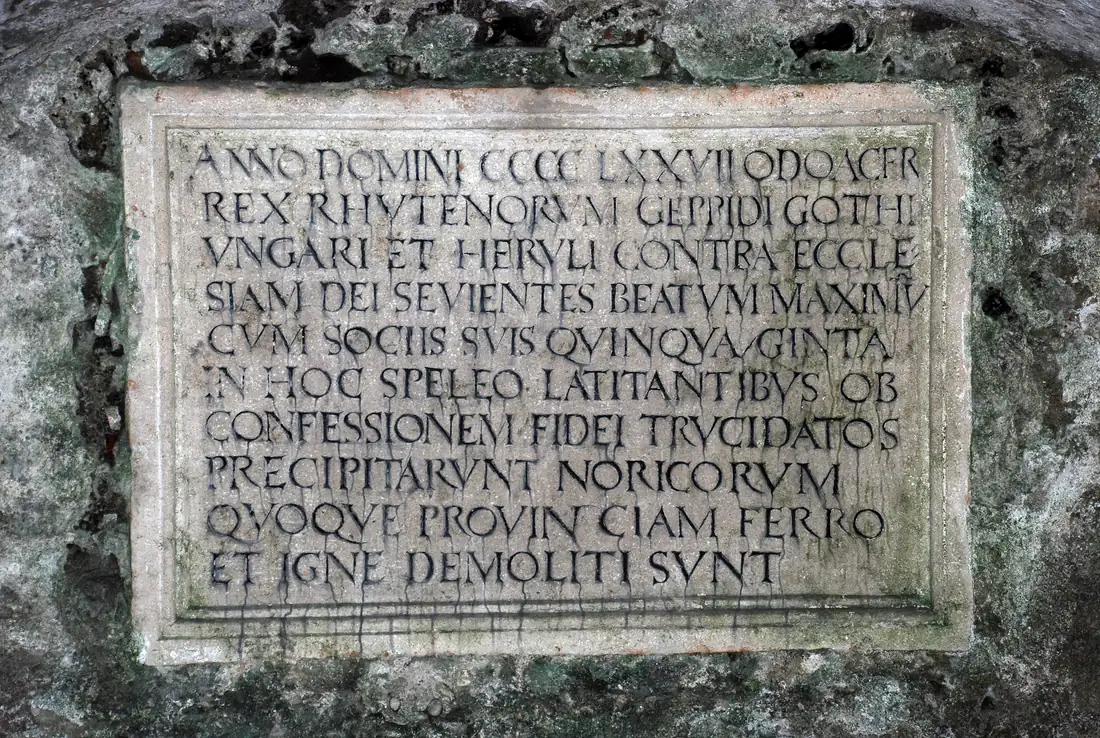
Odoacer Proclaimed King of Italy, Ending Western Roman Empire — Italy
Image: 589holl · CC BY-SA 3.0

Orestes was captured and executed near Piacenza. Ravenna, the imperial capital, quickly fell. The young Romulus Augustulus, caught in the undertow of an empire that had long been sinking, was deposed. This wasn't the usual regicide, however. Odoacer, displaying a surprising flash of leniency, spared the boy's life. He was granted a pension and sent to live out his days in a villa in Campania, a rather pleasant retirement for the final Roman Emperor of the West.

What happened next truly marked the shift. Odoacer did not declare himself Emperor. Instead, he sent the imperial regalia – the diadem, the purple robes – to Constantinople, to the Eastern Roman Emperor Zeno. The message was clear: there was no longer a need for a separate Western Emperor. Odoacer preferred the title *rex Italiae*, King of Italy, ruling not as a Roman but as a Germanic warlord who controlled Italy in Zeno's name. It was an acknowledgment of a new reality: the illusion of a unified, singular Roman Empire, even in its bifurcated form, was over in the West. The empire didn't collapse in a fiery inferno; it simply stopped having an emperor, replaced by a king who understood the local power dynamics better than any distant purple-clad figurehead. The world woke up to find the central pillar of its political order quietly, almost politely, removed, replaced by something entirely different, yet strangely familiar to those who had been doing the real governing for decades.
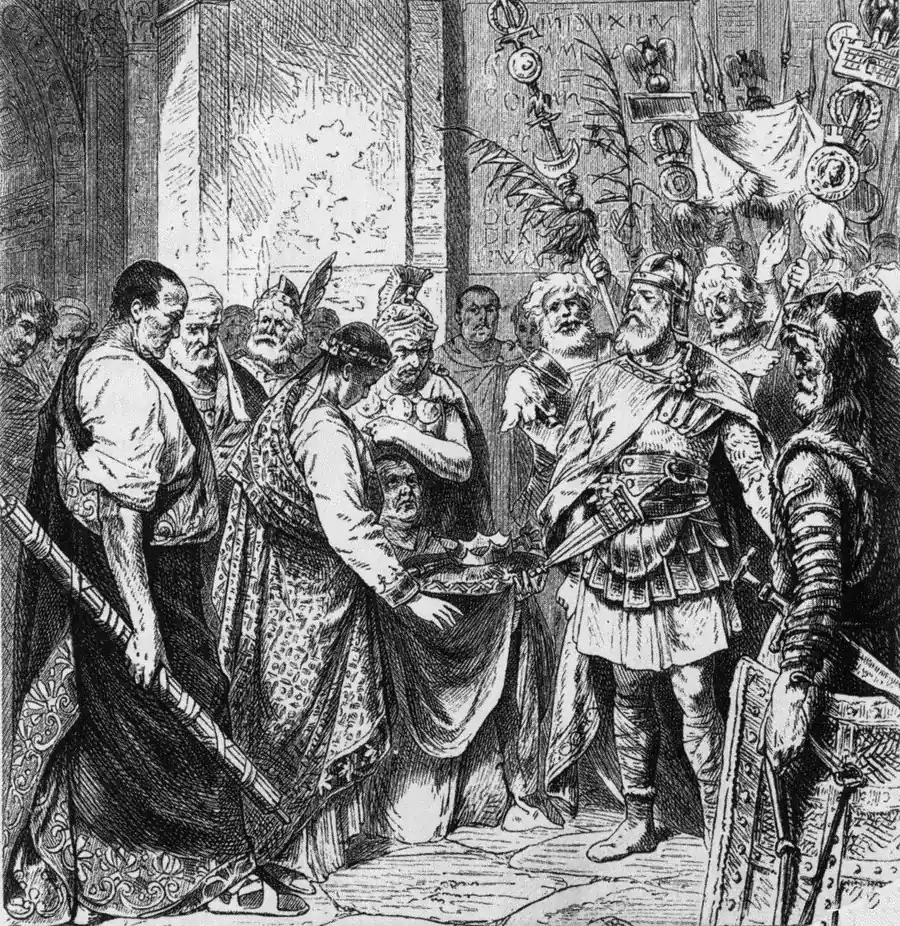
Odoacer Proclaimed King of Italy, Ending Western Roman Empire — Italy
Image: Bernhard Mörlins (B. Moerlins) · Public domain

Source: en.wikipedia.org/wiki/Odoacer
War & conflict

St. Bartholomew's Day Massacre

Paris, France

St. Bartholomew's Day Massacre — Paris, France
Image: François Dubois 1529-1584 · Public domain

The wedding was supposed to fix everything. Not just for Henry of Navarre, a Protestant prince, and Marguerite de Valois, a Catholic princess – a union of unlikely hearts, perhaps, but certainly one of political expediency. No, this grand August spectacle in Paris, 1572, was meant to staunch the bleeding wound of France, to finally bring peace between the warring Catholic and Huguenot (French Protestant) factions. A gesture of reconciliation so monumental, so dazzling, that surely God Himself would have to approve. And yet, within days of the vows, Paris was awash in blood, and the entire edifice of peace collapsed into an abyss of slaughter. The St. Bartholomew's Day Massacre, as it became known, wasn't some spontaneous outburst of religious zeal, however. It was the horrific culmination of a very specific, very human, and deeply botched political calculation.

The real story behind the massacre isn't the mob itself, but the astonishingly rapid unraveling of a royal plot gone sideways. For days, thousands of Huguenot nobles, including their revered military leader Admiral Gaspard de Coligny, had been in Paris for the wedding festivities. On August 22, Coligny was shot in the street. He survived, but the attempt sent shockwaves through the city. Who was behind it? The Guise family, ultra-Catholic rivals of Coligny, were the obvious suspects. But the queen mother, Catherine de' Medici, along with her son King Charles IX, saw a different, more terrifying problem.

Coligny, it turned out, had an unnerving influence over the young King Charles. He was pushing Charles to declare war on Catholic Spain in the Netherlands, a move Catherine vehemently opposed, fearing it would embroil France in a ruinous, unwinnable conflict. The assassination attempt, almost certainly orchestrated by Catherine herself (though she tried to pin it on the Guises), was meant to remove Coligny, to decapitate the Huguenot leadership, and thus, conveniently, prevent a war with Spain. A clean, surgical strike. A perfect political solution, if you will, to an inconvenient and headstrong advisor.

St. Bartholomew's Day Massacre — Paris, France
Image: Timers · CC BY-SA 4.0

But the trick of a surgical strike is its precision. This one was anything but. Coligny survived, and the Huguenot nobility, already a nervous presence in Catholic Paris, became enraged, openly threatening revenge. This was the 'wait, how did that even work?' moment for the royal court. Their elegant plan to quietly remove a problem had instead created a powder keg. Faced with the prospect of Huguenot retaliation and a potential civil war right there in Paris, Catherine and her inner circle panicked. Their solution? A pre-emptive strike, but on a scale that beggars belief.

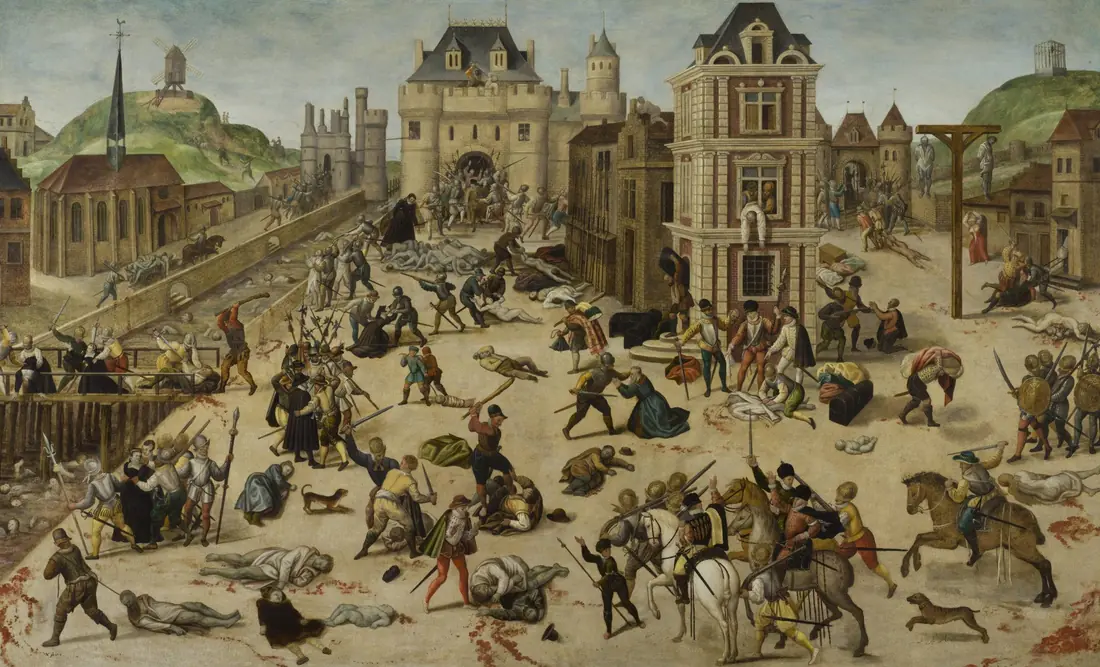
The decision, made in a fevered royal council meeting on August 23, was to eliminate the Huguenot leadership gathered in Paris. All of them. King Charles IX, reportedly under immense pressure, eventually gave the chilling order: "Kill them all, but not one of them must be left to reproach me!" The mechanism of this 'solution' was shockingly simple: once the church bells of Saint-Germain-l'Auxerrois rang in the early morning hours of August 24, royal guards and Catholic citizens, many armed and organized, began systematically hunting down and murdering Huguenots. The initial target was the leadership, but the organized violence quickly devolved into indiscriminate butchery, fueled by religious hatred, personal vendettas, and the sheer chaos of the moment. Estimates suggest that 2,000 to 3,000 Huguenots were killed in Paris alone, with the violence spreading to other cities, bringing the total to perhaps 5,000 to 10,000.

St. Bartholomew's Day Massacre — Paris, France
Image: Flemish school (UnknownUnknown ) · Public domain

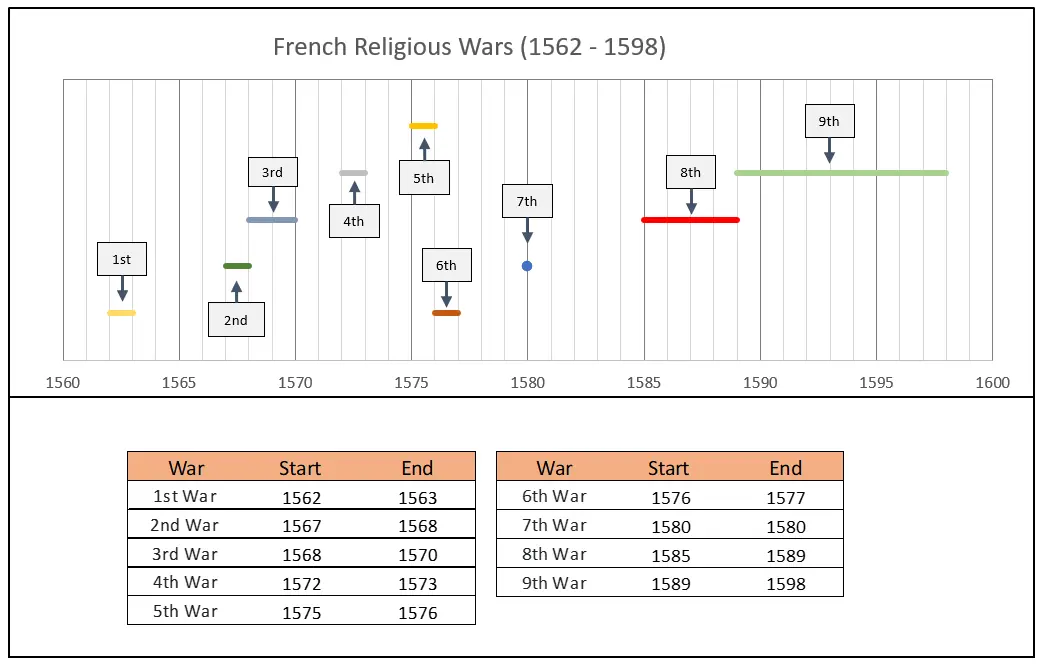
The irony is bitter. Catherine de' Medici’s attempt to avoid one war by eliminating a key player, instead ignited another, far bloodier, phase of the French Wars of Religion. The wedding meant to unify France became its bloodiest symbol of division. And the king, forced into an act of unparalleled brutality, found himself unable to escape the consequences. He died less than two years later, reportedly haunted by the screams of the victims. A king, who merely wanted to avoid a war with Spain, ended up presiding over a massacre that earned him the eternal scorn of history, and plunged his kingdom deeper into religious strife, all because a single gunshot missed its mark, and a precise political maneuver turned into a national bloodbath.

Source: en.wikipedia.org/wiki/French Wars of Religion

Use the arrow keys to move between days

Browse the full archive →