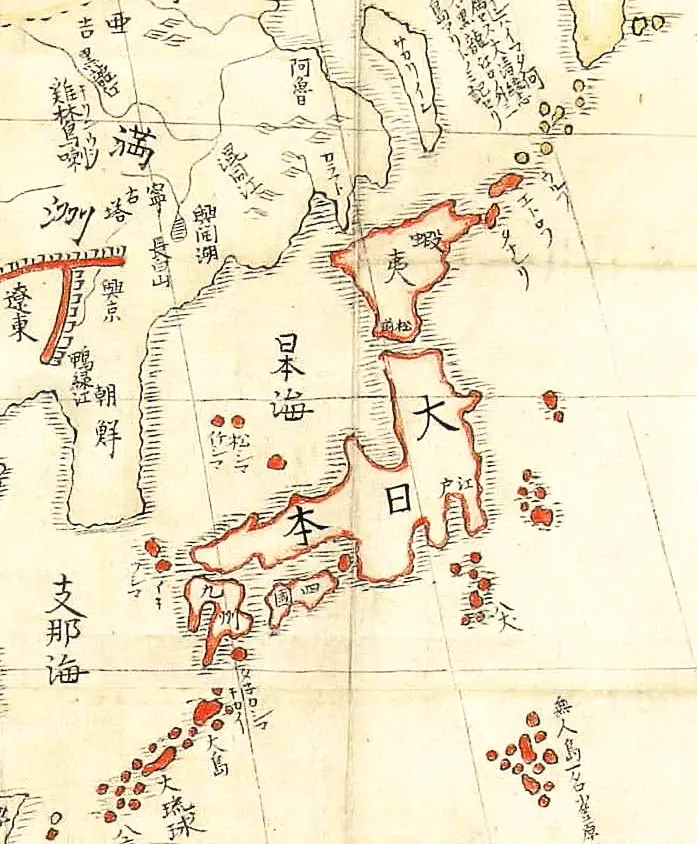
Before October 23, 1868 Japan was ruled by the Tokugawa shogunate, a military government that had controlled the country for more than 250 years. The emperor in Kyoto held only ceremonial status while the shogun commanded the army, collected taxes, and directed foreign policy. The capital city, Edo, functioned as the shogunate’s administrative centre and housed roughly 1.1 million residents, making it the world’s largest urban area at the time. The political system required samurai loyalty to local daimyo who, in turn, answered to the shogun. This hierarchy was considered permanent by most officials, even as Western powers forced unequal treaties that exposed the shogunate’s weakness.
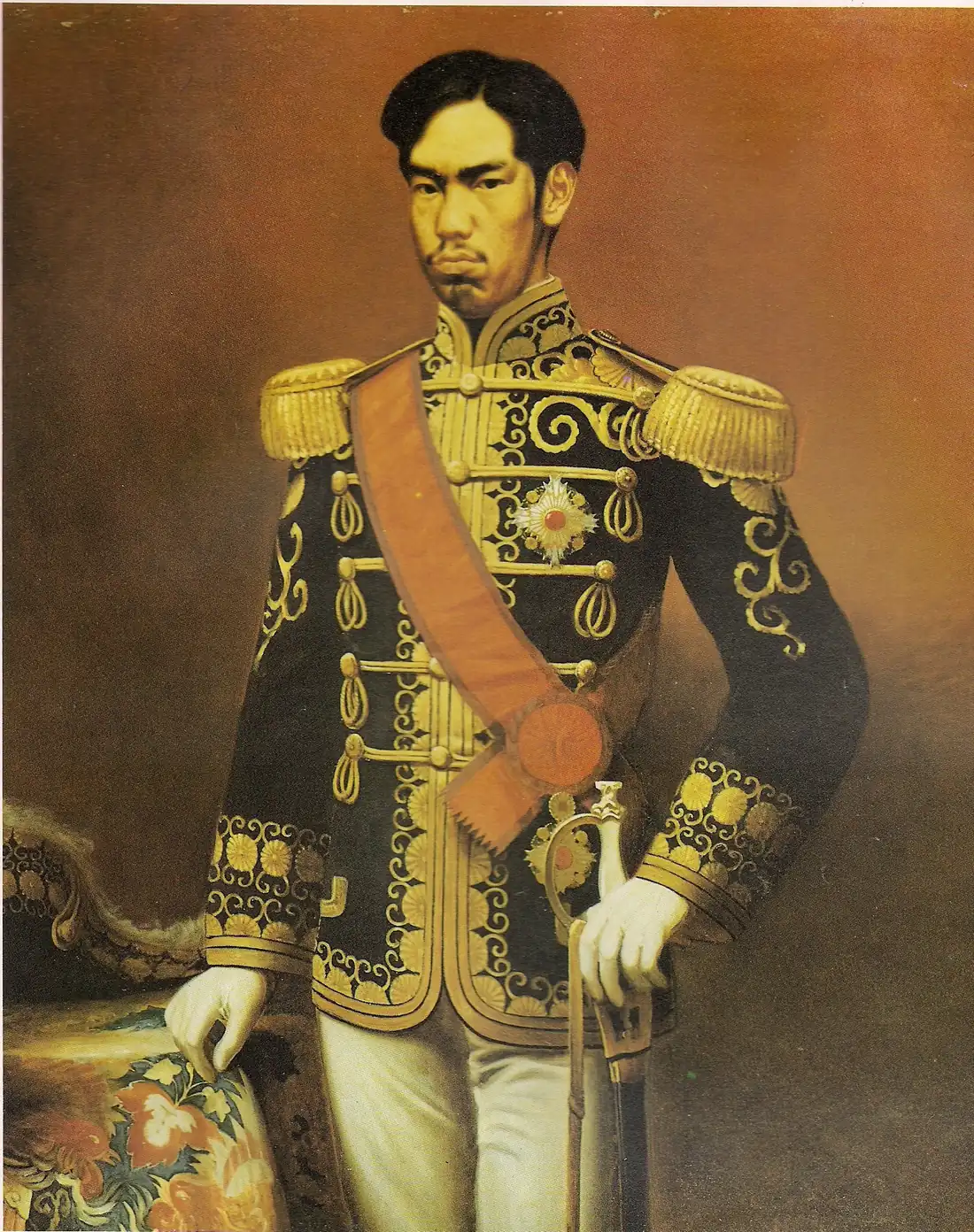
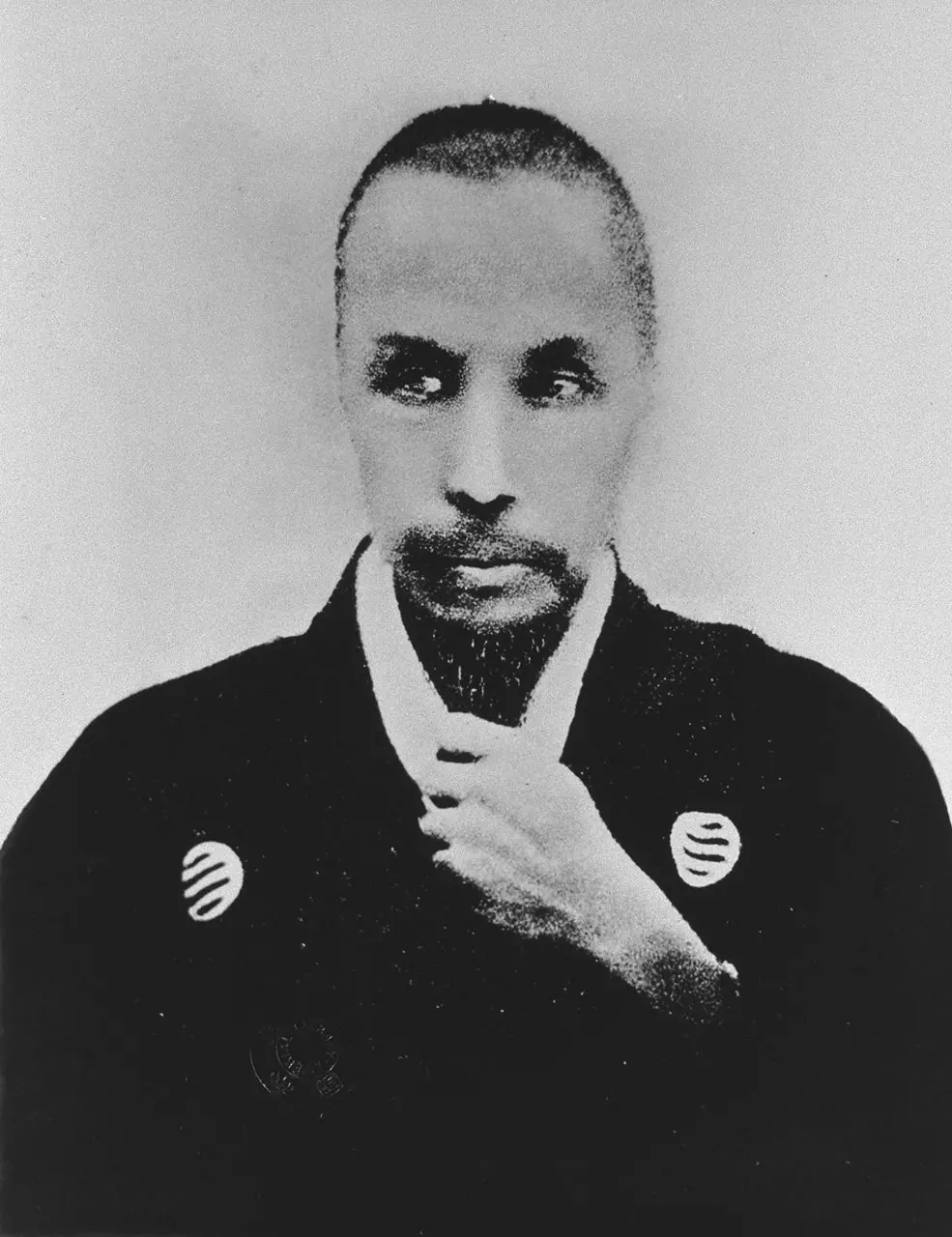
On the morning of October 23, 1868 Emperor Meiji issued an imperial rescript that announced the beginning of the Meiji era and officially moved the seat of government from Kyoto to Edo, which was renamed Tokyo. The rescript was drafted by the court officials Kido Takayoshi and Ito Hirobumi, who had led the movement to restore imperial rule. By changing the capital’s name and relocating the imperial court, the emperor replaced the shogunate’s de facto authority with a centralized state under his direct control. The new government immediately dissolved the remaining samurai stipends, which had totaled 30,000 ryō annually, and began drafting a constitution that would later be promulgated in 1889.
The shift altered Japan’s internal structure in measurable ways. The former shogunate’s bureaucracy, employing about 5,000 officials, was merged into a new civil service that grew to 8,000 by 1872. The daimyo, who previously governed 260 domains, were required to surrender their lands and were appointed as governors of prefectures; the number of prefectures rose from 3 to 72 within two years. Tax collection moved from rice payments to a monetary system based on the yen, introduced in 1871, which standardized rates at 3.5 yen per koku of rice. These reforms reduced the military power of the samurai class, whose numbers fell from roughly 400,000 in 1867 to less than 20,000 by 1876.
The immediate consequence of the imperial proclamation was the creation of a modern bureaucratic state that could negotiate with Western powers on equal terms. Within five years Japan signed the Treaty of Amity with the United States, ending the extraterritorial clauses that had plagued the shogunate. The Meiji government’s centralization laid the groundwork for rapid industrialization, which would transform Japan into a regional power by the early twentieth century.
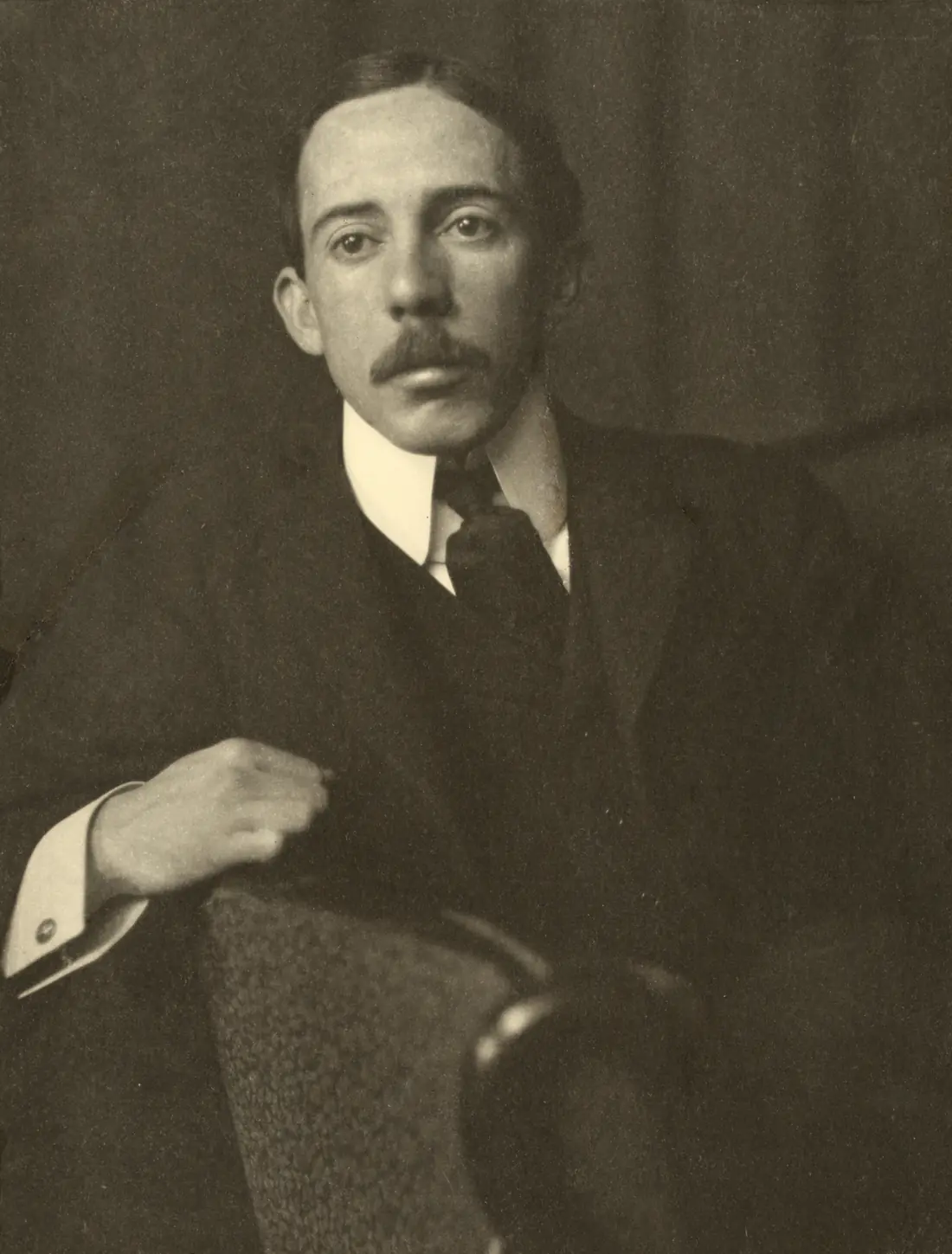
Before 1906 the only sustained heavier‑than‑air flights were achieved in Brazil by Alberto Santos‑Dumont with his 14‑kilowatt airship, and in Europe the Wright brothers had flown in 1903 but their machines were not publicly demonstrated in France. French aeronautical societies had organized exhibitions where gliders were shown, but no powered aircraft had taken off under their own engine power on French soil. The French government granted a prize for the first powered flight of at least 25 metres, encouraging inventors to attempt a public demonstration.
On 23 October 1906 Santos‑Dumont flew his No. 14 aircraft from the Bagatelle grounds near Paris. The machine had a lightweight aluminium frame, a 14‑kilowatt engine driving a three‑blade propeller, and a fixed horizontal stabiliser. He taxied for a short distance, then lifted off and remained airborne for 21 seconds, covering a distance of 60 metres at a height of about three metres. The flight was witnessed by a crowd of roughly 300 spectators and recorded by the French newspaper Le Figaro, which noted the exact distance and duration.
The flight satisfied the criteria of the French Aeronautical Society prize, which required a powered take‑off, a minimum distance of 25 metres, and a landing without damage. The prize of 50,000 francs was awarded to Santos‑Dumont on 16 December 1906, confirming the legitimacy of his achievement. Contemporary engineers measured the engine output and confirmed that the power‑to‑weight ratio was sufficient to overcome drag and lift the aircraft, providing the first quantitative proof that powered heavier‑than‑air flight was feasible in Europe.
The event prompted a surge of interest among French inventors, leading to the formation of several aeronautical clubs and the construction of at least twelve new aircraft designs by the end of 1907. It also influenced the French military, which began evaluating aircraft for reconnaissance, allocating funds to develop a small fleet by 1909. Santos‑Dumont’s flight therefore marked the transition from experimental gliding to practical powered aviation in Europe.
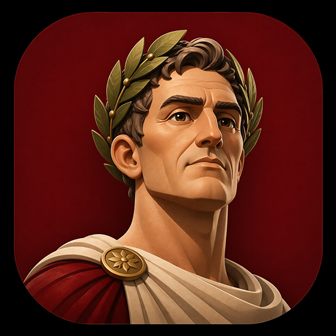
The decisive factor that most accounts omit is the Senate's decision in late 44 BC to grant Octavian and Mark Antony joint command of the eastern provinces. That arrangement gave them legal authority to raise armies and to claim the Republic’s treasury, resources the Liberators could not match. Popular narratives present the battle as a simple clash of personalities, yet the underlying legal grant shaped the forces each side could field.
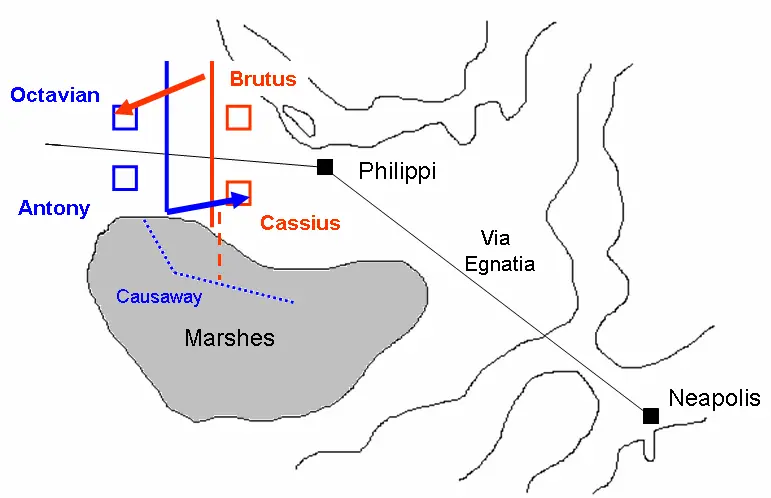
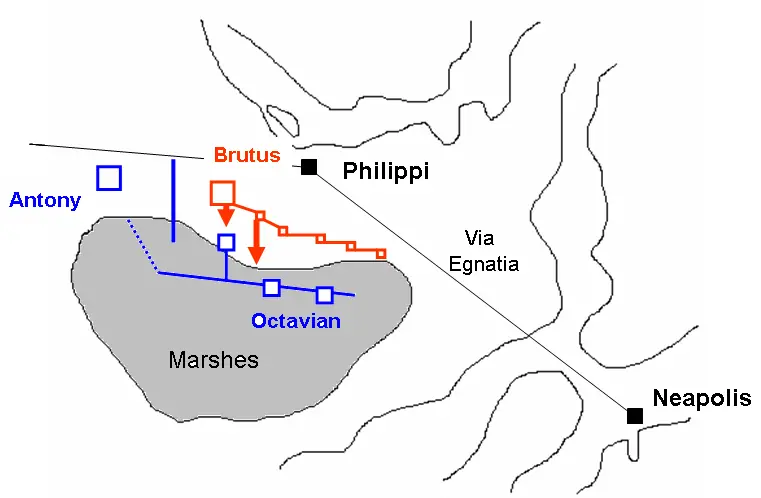
At Philippi the two armies met on a plain near the city in Macedonia. Octavian commanded roughly 28,000 infantry and 5,000 cavalry, while Antony led about 13,000 infantry and 2,000 cavalry. Brutus and Cassius together mustered around 31,000 infantry and 4,000 cavalry. The Liberators placed their strongest legions on the left wing, hoping to roll up Antony’s flank, while Octavian’s veterans held the centre.
On the first day Brutus launched a successful attack on Octavian’s right, forcing the younger commander to retreat across a shallow river. Antony’s forces on the left held, but the Liberators failed to exploit the gap. Modern scholars note that Brutus’ decision to press forward rather than consolidate his line allowed Octavian to regroup overnight. The second day saw Antony and Octavian launch a coordinated assault on the centre and left, breaking the Liberators’ line. Cassius, believing the battle lost, committed suicide; Brutus, after a brief resistance, also took his own life. Contemporary sources record 6,000 Liberator dead and 4,000 captured, while the triumvirs lost about 2,000.
The victory eliminated the last organized opposition to the Second Triumvirate and gave Octavian and Antony uncontested control of the Roman world. In the months that followed the triumvirs divided the provinces, with Antony receiving the east and Octavian the west. The defeat also paved the way for Octavian’s eventual rise as sole ruler, a transition completed after the later conflict with Antony at Actium.
Thus the battle’s outcome rested not merely on battlefield tactics but on the earlier legal grant that supplied Octavian and Antony with superior resources and legitimacy. The defeat of Brutus and Cassius marked the end of the Republican resistance and set the stage for the imperial system that would dominate Rome for centuries.
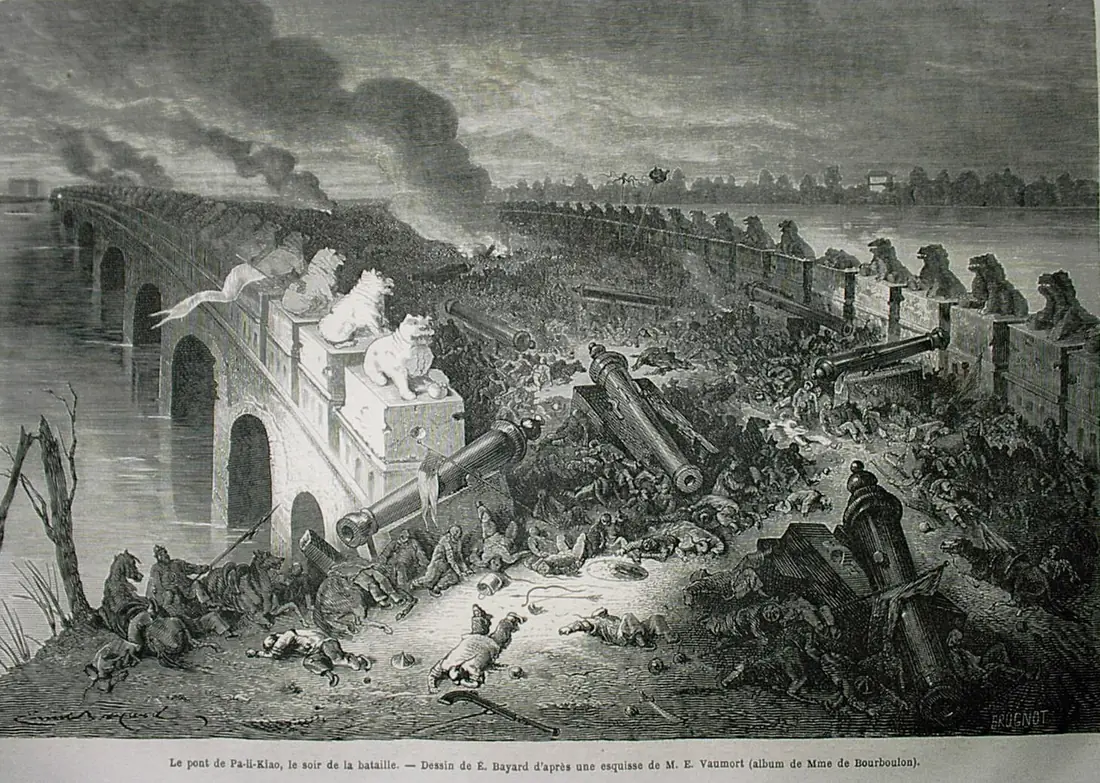
British forces attacked the Barrier Forts near Canton on October 23 1856, marking the opening move of the Second Opium War. The assault was ordered by Admiral Sir Michael Seymour after the Chinese authorities seized the merchant vessel Arrow and imprisoned its crew. Seymour assembled a squadron of three steam‑powered warships, two gunboats and a contingent of 400 Royal Marines. At 07:30 the ships positioned themselves in the Pearl River within cannon range of the forts that guarded the western approach to Canton.
The first target was the North Fort, a masonry structure equipped with twelve 68‑pounder guns. British gunners opened fire with a salvo of shrapnel shells, followed by a direct bombardment from the steamers. After twenty minutes the fort's guns fell silent, and a party of 150 marines stormed the parapet, encountering eight Chinese defenders who were killed or wounded. The North Fort was captured with only three British casualties.
At 08:15 the fleet turned to the South Fort, which held a similar armament but a larger garrison of roughly 300 soldiers. The British repeated the bombardment pattern, adding a heated iron shot that caused the powder magazine to explode at 08:42. The explosion destroyed the main battery and forced the remaining defenders to retreat behind the city walls. British losses rose to seven killed and twelve wounded, while Chinese casualties were estimated at over one hundred dead.
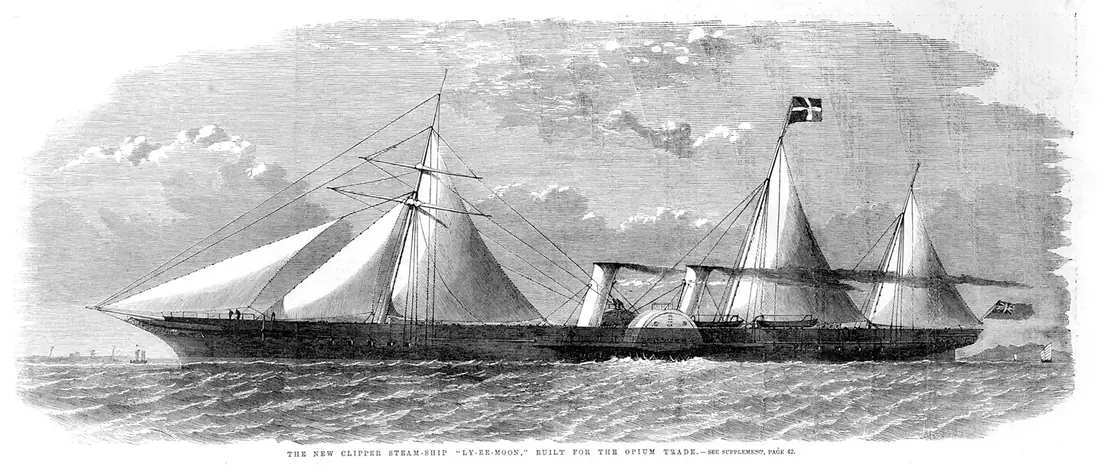
The rapid seizure of both forts gave the British control of the river channel and forced the Canton authorities to negotiate. Within a week the Qing government signed a provisional agreement allowing the British to occupy the forts and to demand the release of the Arrow crew. The incident also triggered a broader diplomatic crisis; the United States and France, citing similar grievances, prepared their own naval forces for action in the following year. The cost of the operation was relatively low for Britain, approximately £30,000 in ammunition and ship fuel, but the Chinese loss of men and fortifications weakened their defensive posture along the Pearl River. The capture of the Barrier Forts therefore set the stage for further military advances that culminated in the Treaty of Tianjin in 1858, which opened additional ports to foreign trade and legalized the opium trade.
The immediate consequence of the October 23 assault was the establishment of a British foothold that compelled the Qing dynasty to concede to foreign demands, reshaping Sino‑British relations for the remainder of the century.
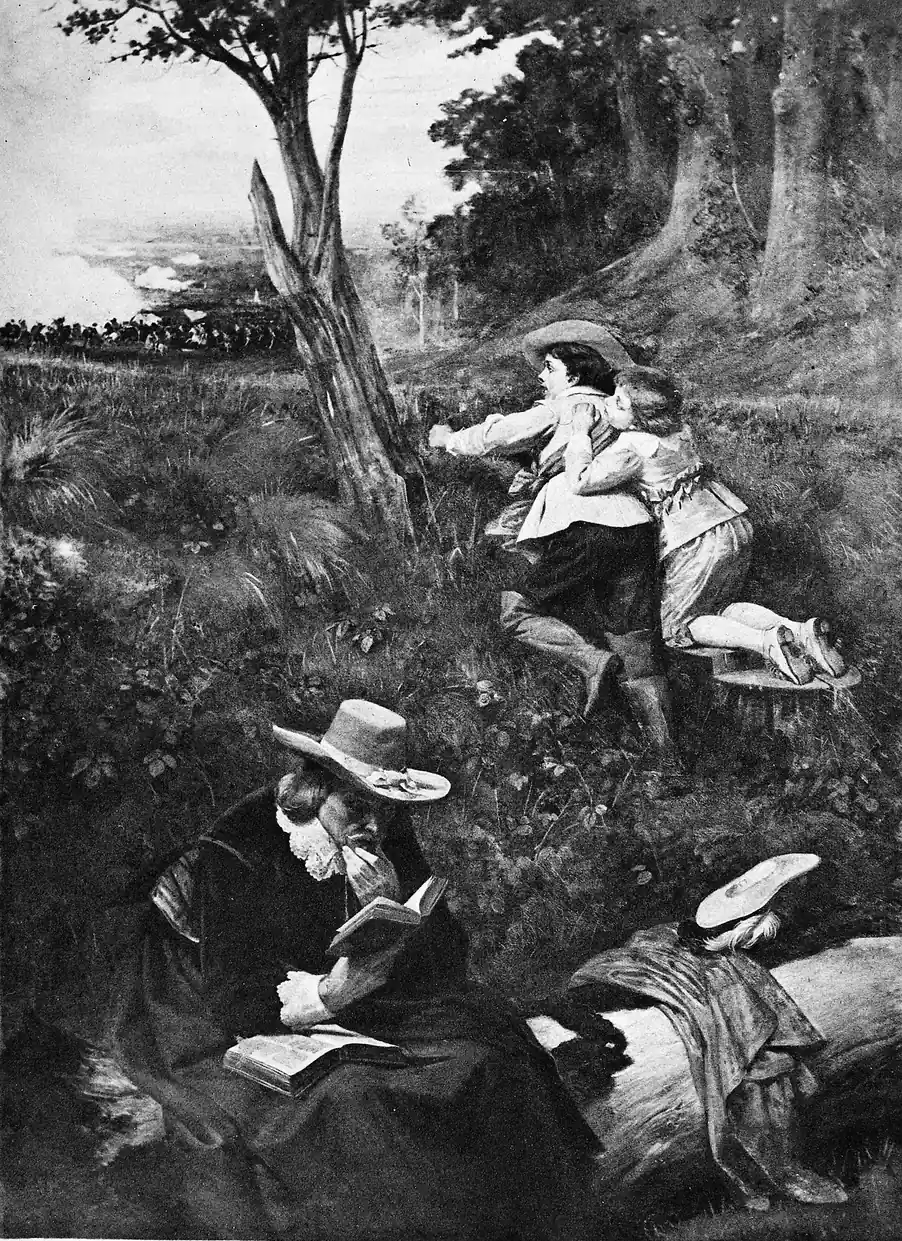
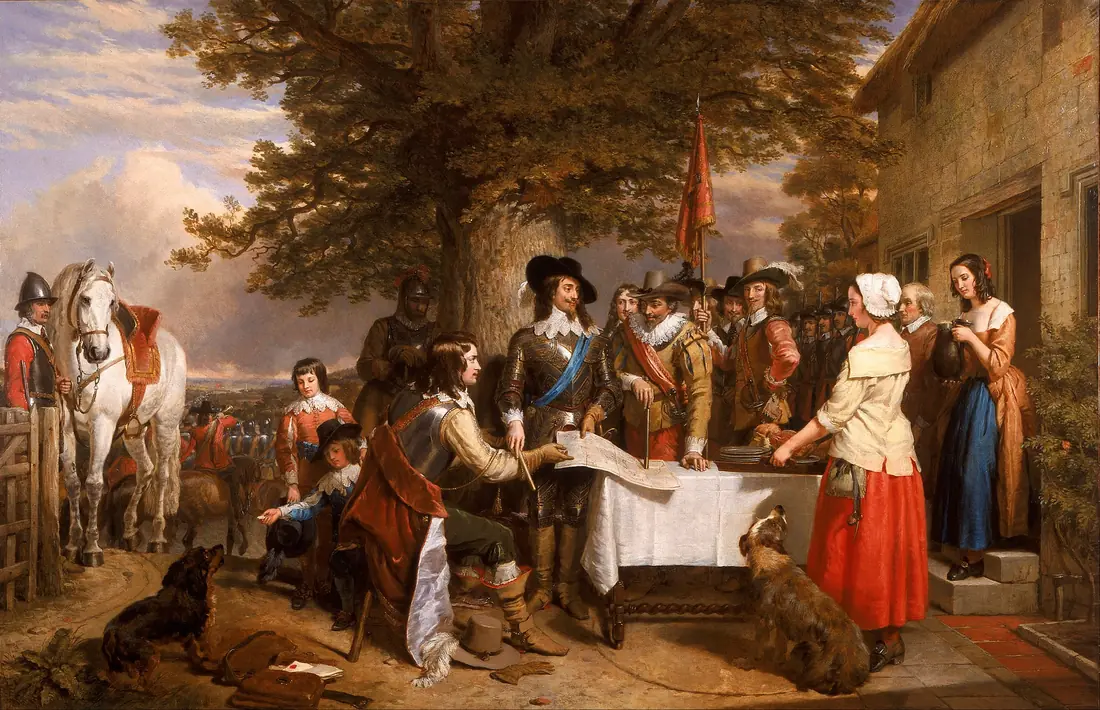
The first field battle of the English Civil War occurred when the Royalist army under King Charles I met the Parliamentarian force led by the Earl of Essex. Both sides had assembled in Warwickshire because control of the Midlands would give either government the logistical base to supply armies and to influence the surrounding counties.
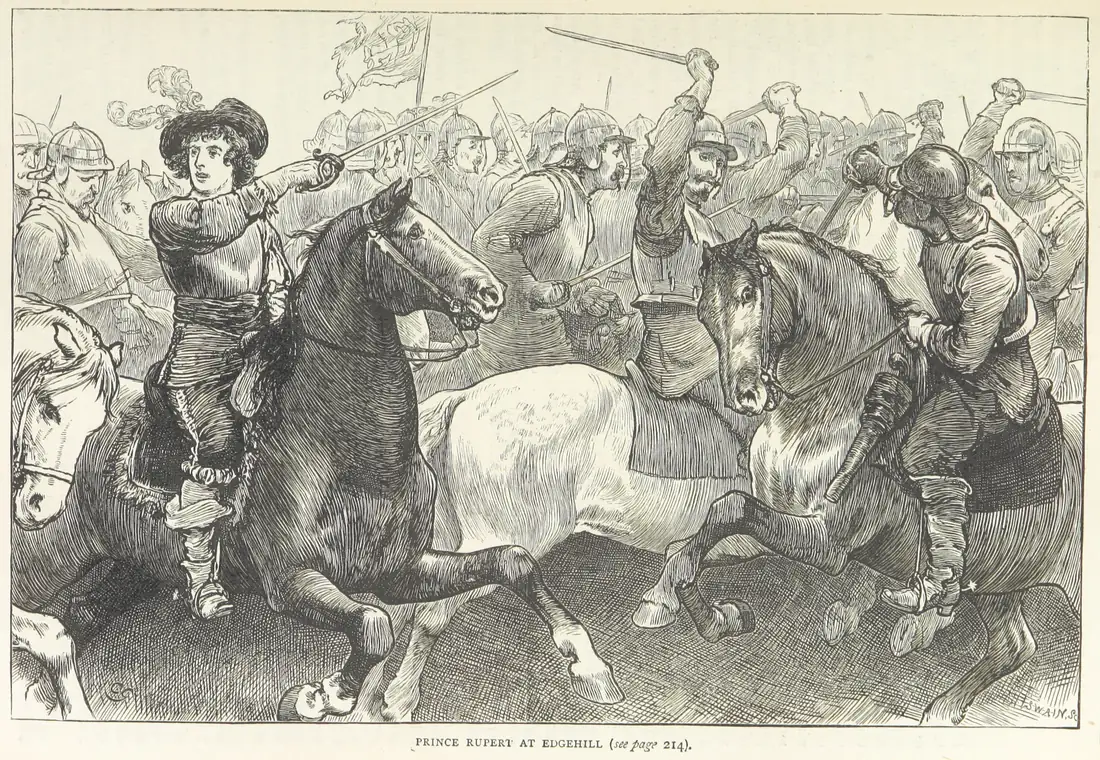
The Royalists fielded roughly 13,000 men, including 3,000 cavalry, 5,000 infantry and 5,000 militia drawn from local garrisons. Their command structure placed Prince Rupert in charge of the cavalry, while the infantry was organized into three regiments of foot, each commanded by a colonel. The Parliamentarians numbered about 11,000, with 4,000 cavalry and 7,000 infantry, and their army was arranged in a traditional “turtle” formation: infantry in the centre, cavalry on the flanks, and a reserve of musketeers behind the lines. The plan relied on the cavalry’s ability to break the enemy’s flank before the infantry engaged.
At dawn the Royalist cavalry charged the Parliamentarian left. Prince Rupert’s horsemen broke through the flank, but the Parliamentarian cavalry under Sir William Balfour quickly counter‑charged and forced the Royalists to retreat. The infantry then clashed in a chaotic melee that lasted several hours. Neither side could hold a decisive advantage; both suffered heavy losses, approximately 2,000 Royalist and 1,500 Parliamentarian soldiers were killed, wounded or captured.
The battle ended without a clear victor, but it demonstrated that large standing armies could be fielded without a monarch’s direct funding, because Parliament raised money through new taxation and loans. This financial mechanism shifted the balance of power: the ability to sustain an army through parliamentary control of revenue became an ordinary feature of English warfare after 1642. The stalemate also forced both commanders to reconsider the use of cavalry as a decisive force, leading to more coordinated infantry tactics in later engagements.
In the weeks following Edgehill, both sides regrouped and reinforced their positions. Charles I retreated to Oxford, establishing it as a Royalist capital, while the Parliamentarians fortified London and continued to raise troops. The battle’s inconclusive result meant the war would continue for another decade, ultimately reshaping the English political system and establishing a precedent for parliamentary control of the military.